Showing posts with label movie review. Show all posts

Sunday, May 1, 2016

Tom Hiddleston: Movie review: 'High-Rise' fascinates with destructive decadence

EXAMINER.COM
April 30, 2016
1:13 PM MST


High-rise

Rating:StarStarStarStarStar

Debuting April 28 on VOD and coming to theaters on May 13, "High-Rise" opens on imagery of a scruffy Tom Hiddleston in disheveled business attire. He is meandering through bloodied, squalid conditions of looted destruction where we find him rotisserie cooking an unusual dinner on a retrofitted spit. His third-person voiceover, backed by a classical record playing in the background, speaks of eerie satisfaction and renewed confidence amid the obviously dire conditions. A jack-hammered transition card hits declaring "three months earlier." That setup begs our minds to question what has transpired to create this reality. Consider that a perfect tease and taste of what is to come in Ben Wheatley's adaptation of J.G. Ballard's dystopian 1975 novel. In the words of Bachman-Turner Overdrive, "you ain't seen nothing yet."


At this new starting point, set in the late 1970's, the Tom Hiddleston we meet is greatly different. He is Dr. Robert Liang and he has just moved into an angular and tiered cement residence building as part of a newly-constructed complex of high-rises in a nondescript suburb of London. Liang is a chilly forensic doctor and an eager social climber seeking new anonymity, a clean slate, and an investment into something unique for a living space. He resides on the 25th floor, which counts as upper middle class within of the 40-story building.

The high-rise was designed to be self-sustaining and self-sufficient with all of the necessary amenities, from groceries to recreational facilities and security, available on the premises for its discerning homeowners. The orchestrator of this well-to-do lifestyle is Anthony Royal, dubbed "The Architect" by the social circles beneath him. Played by Oscar winner Jeremy Irons, he leads this designed and desired utopia from the top in his terraced top-floor penthouse with his trophy wife (Keeley Hawes).


Lavish parties are the seen-and-be-seen events within this closed circuit of a community. Robert attempts to mingle with the myriad of white privilege residents of the building. He catches the romantic eye of Royal’s personal aide, Charlotte Melville (Sienna Miller), a woman with a curious son (Louis Suc) lives in the next floor above him. Quickly, Robert experiences the trappings of the building's readily apparent, yet unwritten, hierarchy and befriends people of different classes. Second floor tennant Richard Wilder (Luke Evans), a TV documentarian, and his depressed pregnant wife Helen (Elisabeth Moss) reek of discontent and embody the brewing struggle of the poorer residents from the lower floors.

Little inconveniences like power outages turn into arguments and tiffs. Envy overcomes decadence. Hosts become bullies and people reveal their classist flaws. Pettiness boils over to rage. Neighborly relationships devolve into isolation. Uncivilized competition decays community harmony. Schemes turn into wars were resources like food, electricity, perks like swimming pools, and the freedom of elevators become contested to the death. Primal violence takes over on every imaginable level. By the time Portishead’s haunting cover of ABBA’s “S.O.S.” shows up, you realize how much everything has changed.


Tom Hiddleston is an ideal lead for Liang. He has the charismatic range to swing from a man built for the finer things to a sullen survivor of cold calculation and resolve. His wicked smirk and smooth line delivery cloak his character’s emotions and intentions brilliantly. Hiddleston is simply intoxicating, as he so often is in both his smaller films like “Only Loves Left Alive” and Marvel blockbusters. Luke Evans provides the strongest voice and performance outside of Hiddleston as the man targeting Royal and system and asking the loud questions no one wants to answer.

Director Ben Wheatley ("Kill List," "Sightseers") has crafted a sharp film of unraveling thrill and suspense that drips with endless style. The director made a wise choice to keep Ballard’s 1970’s setting and time period, giving “High-Rise” a throwback feel and lively tone on multiple levels. Composer Clint Mansell and cinematographer Laurie Rose tinge this film with an auditory and visual palette with period-appropriate filters of soundtrack and light. If you did not know these modern actors, you could have sworn this film was made 40 years ago. The cool exterior of swinging ambiance acts as sheep’s clothing for a savage wolf underneath. This film’s time capsule surface dissolves to keenly project its stout cautionary tale towards parallels to the modern day.

"High-Rise" is a strongly constructed blend of experimental science fiction with colossal political and social commentary. The layers of symbolism, analogy, and allegory are as tall as the building itself. There is a richly disturbing and dark fascination in observing how all of this frivolity comes crashing down in unpredictable and unlimited disaster. In this writer's opinion, inspired by a more pertinent and interesting source, this is the stylish and topical film the overrated "Snowpiercer" could only hope to become with its similarly isolated microcosm of class warfare.

READ MORE HERE: http://www.examiner.com/review/movie-review-high-rise-fascinates-with-destructive-decadence

Thursday, April 14, 2016

'High-Rise' Makes Class Warfare Sexy - Tom Hiddleston, Keeley Hawes, Jeremy Irons

VICE
By Brandon Harris
April 13, 2016


If Brazil, Lord of the Flies, and Snowpiercer were stuck in a blender, the result might look something like Ben Wheatley's strange and stylish new film High-Rise, which makes its US premiere April 20 at the Tribeca Film Festival. An adaptation of J.G. Ballard's 1975 dystopian novel famous for its canine-eating upper classes, High-Rise has polarized audiences and critics, hailed by some as "the social-surrealist film of the year," dismissed by others as "a bit of a dog's dinner." The film takes place in an impeccably ruined residential skyscraper, the high-rise of the title, seemingly beset by dysfunction and outright war amongst its residents, who are arranged vertically by a caste system that is very British, yet uniquely tribal.

"We wanted to make something that was not totally recognizable," the 43-year-old director told me last fall at an impossibly chic hotel bar in the Old Town section of Zurich, where the filmed had screened. The picture has a take-no-prisoners verve and sardonic humor to spare, but one leaves it as if having been bludgeoned with a hammer, unsure of up or down, left or right, teetering on collapse. How did we get here? What are the rules of this place? Wheatley and his collaborators, screenwriter Amy Jump and European mega-producer Jeremy Thomas, seem unwilling to offer anything that resembles traditional exposition or human motive throughout High-Rise's near two-hour runtime.

"Periods don't necessarily look like themselves," he remarked, a riddle for sure, but one that makes sense somehow coming from Wheatley, a portly, blued-eyed, shaggy-haired Brit who has become one of the isles' most lauded young directors in less than a decade of feature work. The director's surreal rendering of Ballard's class-oriented societal meltdown is set in an alternate-reality version of the late 1970s. The clothes and records and décor evoke the period without ossifying us there; the world has progressed in ways that it didn't in our times, but perhaps reasonably could have.

Although there are no poor people present, working- and lower-middle-class stiffs reside on the bottom levels while higher-income professional types, such as our hero Dr. Robert Laing (Tom Hiddleston), live on the middle floors below the haute bourgeoisie at the top. Dr. Laing, who has the style and sophistication of those living on the upper floors, draws the interest of the Architect (Jeremy Irons), a mildly disabled schemer who lives at the top of this Grand Guignol with a diabolical, sexually charged redhead (Keeley Hawes) who tends to horses on their rooftop terrace.


Follow Brandon on Twitter.


Friday, May 29, 2015

Mad Max: Fury Road Review (Tom Hardy, Charlize Theron)

THE NEW YORKER
High Gear
“Mad Max: Fury Road.”

BY ANTHONY LANE


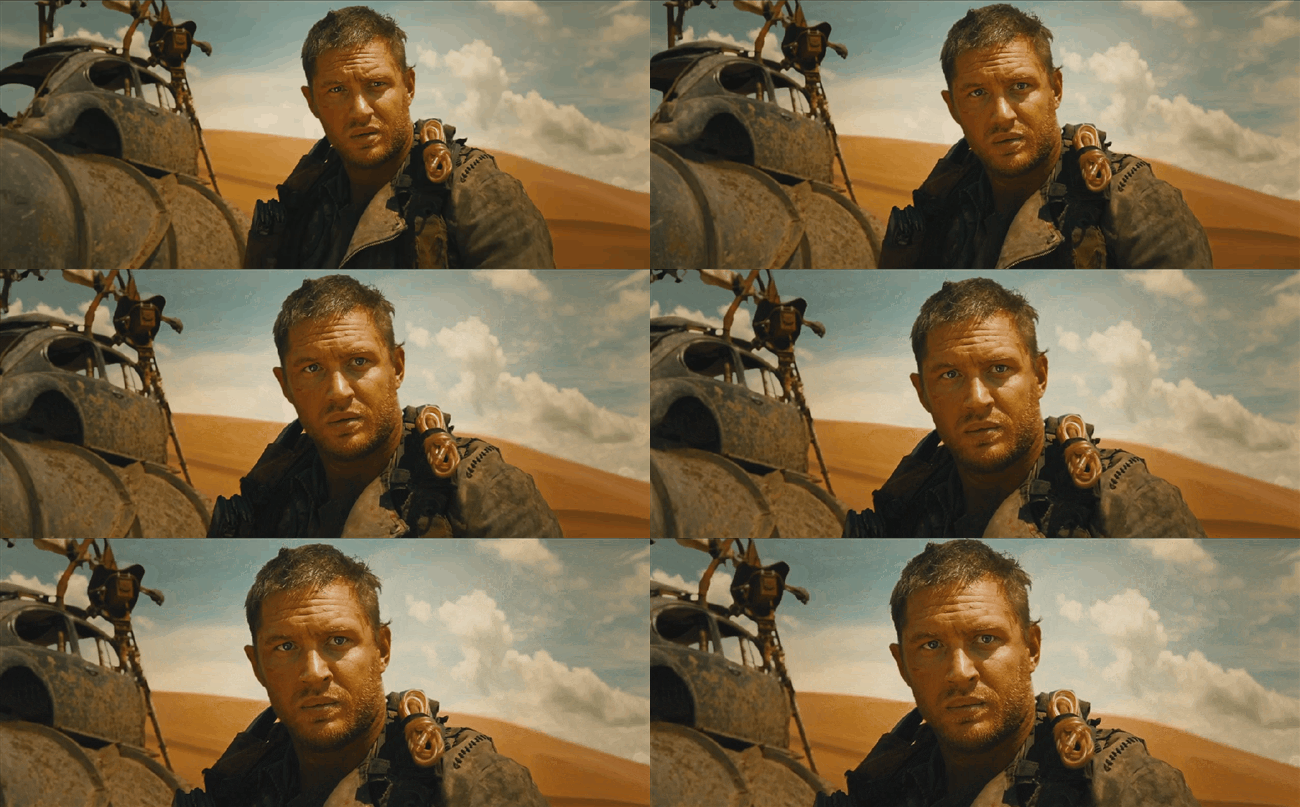
There is a moment, in “Mad Max: Fury Road,” when Max (Tom Hardy) washes blood off his face. This is unsurprising, since he has just engaged in one of many fights, but two points are worthy of note. First, the blood is not his. Second, he washes it off not with water but with mother’s milk, siphoned from a gas tanker. And there, in one image, you have George Miller’s film—wild and unrelenting, but also possessed of the outlandish poetry, laced with hints of humor, that rises to the surface when the world is all churned up.

The movie is set in the near future. There are no cities or civilizations left. The landscape is dying of thirst; water—known as Aqua Cola—is severely rationed; and other resources, notably gasoline, are hoarded and tussled over like scraps of food. Max is a survivor, like everyone else, and, as we join the stream of action, he is captured and hauled into servitude at the Citadel. Girded with towers of rock, this is the desert stronghold of Immortan Joe (Hugh Keays-Byrne), a monstrous figure who lords it over a swarm of ragged wretches. His toadlike skin is caged in a transparent breastplate, and he breathes through a mask that’s armed with yellowing horses’ teeth and fed by bellows that wheeze up and down on the back of his neck. Probably a charming fellow, once you get to know him.


Max, being Max, tries to escape, only to be grabbed once more and strapped to the front of a vehicle, like a fender of flesh, with his sturdy features barred by a metal grille. Tom Hardy fans, who struggled so intently to understand him when he played Bane, in “The Dark Knight Rises,” may be less than thrilled to learn that their hero’s speech is yet again impeded. Just as you’re wondering if the poor guy will ever express himself freely, however, Imperator Furiosa (Charlize Theron), a new acquaintance of Max’s, asks, “You want that thing off your face?” The day is saved, though it’s not as if he starts chatting away like Cary Grant in “His Girl Friday.” You could tattoo the entirety of Max’s dialogue onto his biceps. One of his longest lines is “Hope is a mistake.”

Furiosa has a prosthetic arm, and her tendency to smear black grease across her brow may cause the fragrance honchos at Dior, where Theron is paid to spread the word about J’Adore, to reach for their atomizers. Furiosa is a driver, employed by Joe’s henchmen to transport precious fuel, who suddenly goes rogue, steering the War Rig, her vast and snarling truck, off course. A posse is dispatched to hunt her down. We soon discover her concealed cargo—the Wives, five young women who were imprisoned by Immortan Joe and doomed to bear his children. Our first glimpse of them bodes ill: limber beauties, draped in muslin underwear and hosing themselves down in the middle of nowhere. It’s like the start of a Playboy shoot. Yet the film not only recovers but winds up as a testament to female resilience, thanks to the Vuvalini—a small and leathery tribe of matriarchs, described by the film’s production designer as “lovely old bikie chicks.” Astride belching motorcycles, they hare up and down sand dunes, and accompany Max, Furiosa, and the Wives on the final leg of the plot.

I have been looking forward to this movie for months, trying not to watch the trailers more than twice a day, but, fool that I am, I hadn’t foreseen its feminist ambitions—crystallized in the sight of one Wife, heavily pregnant, flinging wide the door of the War Rig and flaunting her belly, like a bronze shield, at her enraged pursuers. (The Wives were coached in preparation for the film by Eve Ensler, the author of “The Vagina Monologues.” This must be a first. Gloria Steinem was never hired as a consultant on “The Dirty Dozen.”) Later comes a droll sequence with a sniper’s rifle, as our hero aims at a searchlight, in the distant gloom, but misses. Only one bullet remains. Furiosa takes the gun and hits the target, using Max’s shoulder as a rest. The tough guy is nothing but a cushion.


The good news is that “Mad Max: Fury Road” exists in a different league. It lies way, way beyond Thunderdome, and marks one of the few occasions on which a late sequel outdoes what came before. Is it a sequel, though? There are flashbacks to Max’s past, but they are over in seconds, and you can certainly relish the new film, in all its lunatic majesty, without being versed in Maxist dialectics. Indeed, it exults in a proud indifference to backstory. Furiosa mentions her origins, explaining that she was snatched away from “a green place,” but that’s it. As for Max, Hardy is more earthed than Gibson, and less wired—indeed, less mad, propelled not by the engine of wrath but by a solid response to the madness that engulfs the characters like a sandstorm. Max’s deeds rarely strike us as gratuitous. Instead, they seem resignedly brutal, as if there were no other way to live. Whether his deepest desire is for liberty, or simply for a dour solitude, I can’t decide, but I loved the coolness with which, having taken command in battle, he melts away, once it’s over, into the shifting throng.


READ MORE HERE: http://www.newyorker.com/magazine/2015/05/25/high-gear-current-cinema-anthony-lane

Michael Fassbender’s “Macbeth” movie dubbed a triumph at Cannes

IRISH CENTRAL
Debbie McGoldrick @irishcentral May 29,2015 01:26 AM

\"Michael
Michael Fassbender and Marion Cotillard at the Cannes Film Festival on Saturday.

Michael Fassbender joined the stars at the Cannes Film Festival to premiere his latest, Macbeth, which he admits he didn’t even see prior to Saturday.

“I’m going to be seeing it with everyone else at the premiere … I can tell you that Marion [Cotillard] as Lady Macbeth is incredible. I know that from being across from her during the scenes. She’s mesmerizing,” Fass told Entertainment Weekly.


The critics absolutely agreed. The film got some stellar reviews, including this rave from the U.K.’s Telegraph: “After seeing Fassbender and Cotillard in these roles, the thought of ever seeing anyone else play them fades into irrelevance.”

READ MORE HERE: http://www.irishcentral.com/news/irishvoice/Michael-Fassbenders-Macbeth-movie-dubbed-a-triumph-at-Cannes.html#


Saturday, January 3, 2015

Movie review: Jessica Chastain, James McAvoy make 'Rigby' a worthy trip

EL PASO TIMES
By Jocelyn Noveck
The Associated Press
POSTED:   01/02/2015 12:00:00 AM MST


NEW YORK >> All the lonely people. Where do they all belong?

You won't hear that line in "The Disappearance of Eleanor Rigby: Them" (more on that title in a moment), a highly absorbing if unwieldy film starring Jessica Chastain and James McAvoy as a couple struggling to cope — apart and together — with tragedy.

In fact, you don't hear any of that famous Beatles song. But it doesn't matter, because you'll probably be hearing it in your head. It's also an apt 12-word summary of the broader life issues the movie addresses. We're all alone, essentially, no matter how close we grow to others. We're born alone, we die alone, and in between, we cope alone. No one can cope for us.


Not that "Eleanor," written and directed by Ned Benson in his debut feature, is a total downer of a movie. It can't be, with the luminous Chastain and the appealing McAvoy heading an almost ridiculously high-quality cast. "Eleanor" is about messiness, and risk — in life and in love. But it's not all sad.

A word about the format, for those coming in cold: "Eleanor" was originally made as a pair of movies, "Her" and "Him," each a full-length film from the point of view of one character, and made to be seen in either order.


Then the Weinstein Company decided to make "Them," a more conventional approach, edited from the other two. Some who saw the first versions at festivals have objected that much has been lost. But the rest of us need to judge "Them" on its own merits. And it's an engrossing film.

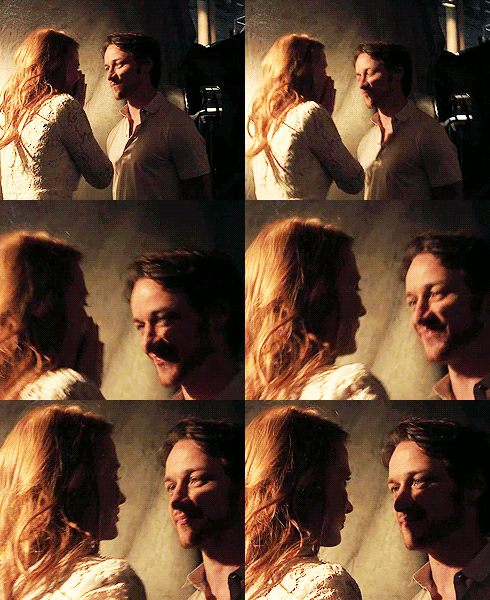
Chastain plays Eleanor — yes, last name Rigby — an anthropology student who never finished her thesis. McAvoy plays Conor, a young bar owner. We meet them as they're discovering the intoxication of first love. It is indeed intoxicating; Chastain and McAvoy have a lovely chemistry.

Cut to an indeterminate time later. Eleanor is pale and troubled. We see her take a desperate act; we don't know why.


The film then follows both Eleanor's route to recovery (we're being intentionally vague here), and Conor's efforts to track her down. We learn that the two are married, and have suffered a grave setback.

Either Conor or Eleanor is onscreen at all times. Occasionally, they're together. These scenes are what we wait for: They often crackle with conflicted emotion, and, in one case, deep, unforgettable heartbreak. Chastain's Eleanor is nervous, flitty, on edge, but every so often her smile breaks the melancholy, and it boy, delivers. This movie only cements Chastain's status as one of the most compelling actors of her generation. It's hard to look away from her. And why would you?

Perhaps this enhances McAvoy's performance, for Conor can't look away from Eleanor, either. He's possessed by love, but also frustrated and mystified by it. Kudos to the Scottish actor, first for his flawless American accent, and second for finding a way to so deftly command his own space onscreen, alongside a fiery presence like Chastain's.


READ MORE HERE: http://www.elpasotimes.com/entertainment/ci_27241492/chastain-mcavoy-make-rigby-worthy-trip


Thursday, August 28, 2014

Michael Fassbender: Frank Exposes the Gulf Between the Brilliant and the Rest of Us (movie review)

MIAMI NEW TIMES
By Amy Nicholson Thursday, Aug 28 2014

<i>Frank</i> Exposes the Gulf Between the Brilliant and the Rest of Us

Frank never takes off the head. But how does he eat, brush his teeth, or shave, Jon asks? Replies Soronprfbs' manager (Scoot McNairy): "You're just going to have to go with this." So we do. Director Lenny Abrahamson frames the film as a millennial myth, sealing the band away in a remote cabin in Ireland to record its first album, which sounds like whale noises, acid freak-outs, and the B-52s. (Composer Stephen Rennicks may be a genius himself.) Isolated among the trees, Frank walks tall — all Fassbender has to act with is his spine — and unnerves Jon with his ability to compose a song as easily as breathing. An off-the-cuff ode to a strand of fabric becomes a ditty worthy of prime Paul McCartney. He's no gimmick — he just looks like one — and like Jon, we're torn between wanting to share his gifts with the world and the looming fear that the world has become so cynical that it will write him off as a joke.


Wrested from the forest and steered at Jon's request to the streets of Austin's South by Southwest festival, Frank looks smaller and stupider — no better than the twee ­ukulele starlets and a whole lot less accessible. The real-world detour is grating, as are Jon's frequent tweets about the band, but that they cheapen the alienness of the film's first half is kind of the point. As much as we might wish they weren't, our brains are aligned with the small-minded and corruptible Jon: Our culture has so merged music and commerce that we can't be in the thrall of splendor without wondering how to market it. Even Frank himself falls sway to fame, muttering about YouTube, which he calls "secret camera," as if it's a mystifying cargo cult. Only Gyllenhaal's angry art-rock girl is aware of the fragility of his mental health: Frank doesn't wear the head because he can; he wears the head because he must.

Look closely at Frank's mask and you'll spot two plaster bandages by his nose, a hint of a life that's taken some lumps. Study Fassbender's limbs and see one of the best physical performances of the decade. His face never changes, but he has visible soul. In small movements — the twitch of a hand, a wobble under a door frame, a beer, and straw held uselessly by his painted mouth — Fassbender gives us glimpses of what Frank's isolating genius has cost him. Would we, too, sacrifice normal pleasures for a chance at eternal greatness? Or would we rather suffer alongside Jon, cursed with the heart-melting torture of knowing that the gods of music will never love us in return?


READ THE FULL REVIEW HERE: http://www.miaminewtimes.com/2014-08-28/film/frank-movie-review/


Sunday, January 19, 2014

Sundance Review: ‘Frank’ Starring Michael Fassbender, Domhnall Gleeson & Maggie Gyllenhaal

INDIEWIRE
BY RODRIGO PEREZ
JANUARY 18, 2014 11:06 AM


Are some diamonds in the rough so special they can only exist on the fringes? When a rare species enters the ecosystem of the mainstream, do its fragile, sensitive needs break down amongst the polluted elements around it? These are some of the ideas expressed in “Frank,” an off-the-wall and terrific paean to the misfits and freaks of the world, their dreams, visions and togetherness.

In a small, quaint English town, the naïve, ginger-haired dreamer Jon (Domhnall Gleeson) lives a placid, but utterly charmless life. A cubicle drone, he tweets out utterly banal thoughts (“Panini with cheese and ham #livingthedream”), but Jon’s waking life is but waiting moments in between the songs he’s constantly composing in his head. A wannabe musician, Jon has zero outlet for his little songs and quietly yearns for something more. Right on cue, as if the antenna of the world is finally listening, Jon’s universe is transformed when he accidentally meets a strange, dysfunctional psych-rock outsider band (think a Shaggs-y version of the Velvet Underground meets Captain Beefheart and Daniel Johnston), the unpronounceable and cult-like Soronprfbs, who have lost their keyboardist to madness (trying to drown himself on a frigid English beachfront no less). With the band in town for a gig, Jon offhandedly offers his keyboard skills (he can play F, C & A), and much to his surprise, the band’s unhinged and loony manager Doug (Scoot McNairy), gives the young lad an impromptu chance to fill in for the evening. It’s a bit of a disaster, but Jon is invited to join the band anyhow. And when the malfunctioning, ramshackle group retreats to a cabin in the woods in Ireland to record a new album, their adventure begins. Guileless and way out of his depth, the experience is initially transformative to Jon, but eventually begins to take on a much darker edge.


Always jamming with wild, feral abandon, Soronprfbs consists of: Frank (Michael Fassbender), the damaged, Syd Barrett-like musical genius of the group who suffers from an “above board” medical condition that maintains he must wear a papier-mâché visage over his head at all times; Clara (a scene-stealing Maggie Gyllenhaal), the belligerent and humorless synth/theremin/noisemaker; Baraque (Francoise Civil), the French-only speaking bassist/guitarist; and the aloof Nana (multi-instrumentalist Carla Azar of Autolux, collaborator with PJ Harvey, Jack White), the Moe Tucker-like thumping drummer.


while some will focus on the conceit of Michael Fassbender wearing a papier-mâché head for much of the film, and some of the odder elements of the movie, you'll likely be too caught up in the deeply inventive, playful and idiosyncratic film to give it much thought. And though some pundits may claim that “Frank” may just be too strange for the average moviegoer, those with at least a working sense of modern day music and the struggles of artists should easily relate and empathize. The bizarrely brilliant “Frank” demonstrates that quirkiness need not be a four-letter word in the language of movies. It certainly won’t be for everyone, but this terrific and sublime experience, and strikingly original film, is mandatory watching for the adventurous viewer.  [A]


READ MORE HERE: http://blogs.indiewire.com/theplaylist/sundance-review-frank-starring-michael-fassbender-domhnall-gleeson-maggie-gyllenhaal-20140118

Saturday, January 18, 2014

Tom Hardy Drives a Car For 85 Minutes, And It's Mesmerizing

VANITY FAIR
BY JULIE MILLER
JANUARY 17, 2014 2:49 PM

\

There are worse places to spend 85 minutes than inside a car with Tom Hardy, even he ignores you the entire time to make calls on speakerphone. This lesson comes courtesy of Steven Knight’s experimental Sundance entry Locke, during which Hardy does just that in real time without ever exiting his vehicle or speaking to another person face-to-face.

And despite those somewhat extreme constraints, the drama is compelling, genuinely moving, and suspenseful. It's a singular achievement for Knight, who also wrote the drama’s measured script, and Hardy, who manages to propel the story forward even though his butt is planted in the same position for an hour and a half.


The film opens on Hardy, a construction manager named Ivan Locke, as he steps into his BMW S.U.V. and leaves a work site. During each phone call Locke makes, the audience slowly discovers more about Hardy and his late-night excursion via trickles of exposition. Knight carefully unfurls more stakes about why Hardy’s car ride is so urgent, why his family is so disappointed in him, and why the timing of his trip is so damning for his construction company.

As the pressure on Hardy’s character mounts, the actor never resorts to showing his stress by going Nic Cage on us—raising his voice, banging on a steering wheel, or flipping off speeding passersby. Instead, he speaks in a Welsh accent so lilting and soothing that we would personally request it for our iOS if we lived in a future Her-type universe that allowed us to make these kinds of decisions. Even though he maintains composure (for the most part), and his position at the wheel for the entirety of the movie, Hardy, with Knight's direction, is able to summon legitimate suspense thanks to the script’s snaking personal revelations, which are masterfully laid out.


READ MORE HERE: http://www.vanityfair.com/vf-hollywood/tom-hardy-locke-sundance

Tuesday, September 24, 2013

James McAvoy: Movie review: Filth (5 stars)


James McAvoy stars as womanising cop Bruce Robertson

DAILY RECORD
By Garry McConnachie
September 23, 2013

ADAPTING an Irvine Welsh novel for the big screen can be fraught with danger. Especially following the outstanding Trainspotting.

Some have tried - and failed - to make the transition work. Most recently Rob Heydon's Ecstasy was met with critical and public derision.


However, Scots director Jon S Baird could be set to step out from the shadow of Danny Boyle's 1996 effort with Filth - one of the most ballsy and in-your-face black comedies to hit the big screen in quite a while.

Those who have read the book will know all about the debauched exploits of Detective Sergeant Bruce Robertson (James McAvoy). For those who haven't, he's an Edinburgh police officer. To say he's an extreme character would be doing him a disservice. Happy to snort coke on the job, sleep with a colleague's wife and manipulate anyone who gets in his way, Bruce doesn't seem to have any boundaries.


With a detective inspector promotion in the offing, Bruce is tasked with leading a case involving the murder of a Japanese student in the capital. However, his extra-curricular activities begin to get in the way. Add to this is his attempts to be reconciled with his wife and daughter and this is no teddy bears' picnic.

It's worth starting with the obvious. Filth is explicit, OTT and, quite often, surreal. This isn't a film for the easily offended or the weak of heart. Much of what happens on screen is jaw-dropping in its absurdity. But all of it works a treat down to a bizarre cameo that's worth admission money on its own. Bruce is such a big character that everything he does is amplified. Dishevelled and constantly drunk, he's not the shy retiring type.


Friday, August 23, 2013

Martin Freeman, Simon Pegg, Rosamund Pike:'The World's End' review: A fresh, funny pub crawl (review)

SF GATE
Mick LaSalle
Updated 3:33 pm, Thursday, August 22, 2013

Nick Frost (left), Eddie Marsan, Simon Pegg, Paddy Considine and Martin Freeman play old friends on a drinking binge in "The World's End." Photo:  Laurie Sparham, Focus Features
Nick Frost (left), Eddie Marsan, Simon Pegg, Paddy Considine and Martin Freeman play old friends on a drinking binge in "The World's End." Photo: Laurie Sparham, Focus Features

Comedy-adventure. Starring Simon Pegg, Nick Frost and Martin Freeman. Directed by Edgar Wright. (R. 109 minutes.)

One of the weirder aspects of adolescence is that it's possible to have close friends you don't like, that you're just thrown in with. In "The World's End," one of those friends comes back into the lives of his four former high school buddies, two decades later, hoping to re-create the most glorious day of his youth, an all-night drinking binge. And they give in to the force of his personality and agree to join him.


For about an hour, "The World's End" is the story of four settled men, in early middle age, dutifully following their old school friend from pub to pub. Nick Frost, Martin Freeman, Paddy Considine and Eddie Marsan are all talented actors, with Frost and Freeman particularly skilled in comedy, and together the five principals create the sense of men who have known each other for many years. The banter is effortless; the comedy flows.

Then the movie takes a turn into a rather unexpected direction, one foretold in the coming attractions trailer, and one that will probably be discussed in most reviews, but I won't do it here, because I enjoyed the surprise. To state it generally, the movie goes from a character study to something that is quite nutty, and yet it loses nothing in the transition. The characters stay vivid, the interaction essential, and the issues introduced remain on the table and continue to be developed. There's just this whole other crazy thing going on at the same time.

READ MORE HERE: http://www.sfgate.com/movies/article/The-World-s-End-review-A-fresh-funny-pub-crawl-4753255.php

Friday, May 24, 2013

Tilda Swinton and Tom Hiddleston make a sexy, pallid double act in Jim Jarmusch's languorous new vampire comedy ONLY LOVERS LEFT ALIVE, writes Robbie Collin. (TELEGRAPH)


Dir: Jim Jarmusch; Starring: Tilda Swinton, Tom Hiddleston, John Hurt, Mia Wasikowska, Anton Yelchin. 123 min.

Only Lovers Left Alive, the languorous new comedy from Jim Jarmusch, centres on two vampires in reflective mood. They are Adam and Eve – perhaps the Adam and Eve – and they are played by Tilda Swinton and Tom Hiddleston to draculine perfection. Swinton and Hiddleston, you imagine, would require very few adjustments to convince as two members of the beautiful undead. Perhaps the make-up team sprayed on a little fake tan and left it at that.

Jarmusch's picture was the second-last to screen in competition at this year’s Cannes Film Festival, and the weary audience were right in step with its drowsy, meditative tone. When the film begins, the two lovers are on opposite sides of the globe. Adam is in a crumbling mansion on the outskirts of Detroit, a city that itself looks thoroughly bled dry; Eve resides by a souk in Tangiers.

Each has a reliable supply of fresh blood at hand: Adam from a bribable haematologist at the local hospital, and Eve from Kit Marlowe – yes, that Kit Marlowe – who, in the Jarmusch world, is also a vampire, is played by John Hurt, and wrote the complete works of Shakespeare.

Early on, Eve flies to Detroit and the couple are happily reunited. They drive around the city at night visiting points of interest to vampires – “Look, there’s Jack White’s house,” says Adam – and sup top grade Type O Negative plasma from dainty glass goblets. Afterwards they slump backwards in a spaced-out state, utterly bloody-minded.


read more: http://www.telegraph.co.uk/culture/film/cannes-film-festival/10080087/Cannes-2013-Only-Lovers-Left-Alive-review.html

Friday, May 10, 2013

Luke Evans: MOVIE REVIEW 'NO ONE LIVES' A Night in Louisiana Can Be Harrowing, by Ryuhei Kitamura (NEW YORK TIMES)


Utterly mad yet improbably fascinating, Ryuhei Kitamura’s “No One Lives” camouflages an oddly compelling central idea with the trashy trappings of the low-budget slasher movie. The expectations raised by the first 20 minutes, however, make it all the more disappointing when incoherent slaughter replaces soul-chilling dread.

Unfolding in a single, eventful night, David Lawrence Cohen’s loopy script details the outrageous misfortune of Driver (Luke Evans) and Betty (Laura Ramsey), a tense couple with a weird interpersonal vibe. After stopping at a deserted motel for cryptic conversation and explicit sex — during which we notice the strange scar on Betty’s stomach — the pair run afoul of a ruthless gang of hillbilly hooligans. News of a missing heiress streams from televisions, but what she has to do with any of our characters has yet to be revealed. Like the hillbillies, we’ve only just realized that attacking Driver might not have been the wisest move.

Filming in Louisiana, the photographer Daniel Pearl (who shot the 1974 “Texas Chainsaw Massacre” as well as the 2003 remake) gives the early scenes a vague but irresistible menace. Terrified screams echo in dense woods, pounding feet crunch through glass, and animal traps lie in wait for the unwary. But Mr. Kitamura, an action enthusiast who prefers to show rather than tell, seems unaware that the film’s dialogue is laughable, its characters unfathomable and the acting often less than optimal.

Saturday, April 20, 2013

James McAvoy: At the Movies: ‘Trance’ is Eye-catching

By Megan Bianco

We’ve had a few films already this year with surprising plot twists like Side Effects, Stoker and The Place Beyond the Pines, and Trance follows suit effectively. Boyle’s fast-paced, flashy style and Rick Smith’s score fit Joe Ahearne and John Hodge’s script memorably and intriguingly. McAvoy proves that he is capable of playing nice guys and bad guys, while Dawson carries the film just fine as one of 2013’s smartest characters thus far. What Inception did for dreams on screen, Trance does for memories.

READ MORE: http://www.thecapistranodispatch.com/2013/04/19/at-the-movies-trance-is-eye-catching/


Friday, April 5, 2013

JAMES MCAVOY: Movie Review: In Danny Boyle's Trance, McAvoy, Dawson and Twisted Memories Posted: 04/04/2013 6:28 pm CARYN JAMES (HUFF POST)


Playing a sophisticated London auctioneer, James McAvoy gazes into the camera with cool, nerveless clarity as his voiceover gives us the inside tricks of protecting and stealing a painting. This opening sequence of Danny Boyle's Trance is no more than exposition with a dash of red herring, and shouldn't work at all. Yet it does because McAvoy's voice is so captivating, already layered with deception and delusion, and because Boyle's visual creativity sweeps us along.

We zoom into the auction room; we're in a van with a gang of mercenaries hired by the auction house in case of trouble; a black and white flashback shows us the good old days when it was easy to steal a Rembrandt. Keep in mind how well McAvoy and Boyle save this opening; that will be extremely relevant to the ending of Trance, a film that looks like a heist movie wrapped in a memory puzzle, but is itself a kind of red herring.

For a good long time, it is also fun to watch, with Simon (McAvoy) in the middle of the action when robbers rush in to steal a Goya painting that has just sold for over 27 million pounds. As he has been trained to do, Simon grabs the painting to carry it to a safe place, but is thwacked on the head by the mastermind behind the crime, Franck (Vincent Cassel), and loses his memory of what he did with the Goya. Maybe a hypnotherapist, Elizabeth (Rosario Dawson), can help?

Very quickly, we're led to wonder who was really involved in the theft, then who's double or triple-crossing whom. This is Boyle from an excellent vintage: his first feature, the delicious dark comedy Shallow Grave (1994) plays the same game of whom do you trust? Is there any honor or truth among thieves? In Trance, we also wonder about the weird coincidences and lapses in Simon's recovered memories. At first, the looping, Rococo plot unfolds with such ease that we barely have time to realize there's a French robber and an American hypnotist in London, as if they were the U.N. of thugs and therapists.

Flitting back and forth between present-day scenes and memories, Boyle and cinematographer Anthony Dod Mantle (their many films together include Slumdog Millionaire) create a sleek, almost photorealist London, with flashbacks and memories so sharp and bright it's deliberately hard to know what's real and what's not.

READ MORE: http://www.huffingtonpost.com/caryn-james/movie-review-danny-boyles_b_3009779.html

Saturday, January 26, 2013

'Quartet' illuminates no matter the age (PHILLY.COM)


STEVEN REA, INQUIRER MOVIE COLUMNIST AND CRITIC
POSTED: Thursday, January 24, 2013, 2:31 PM


'Old age ain't no place for sissies," Bette Davis once famously observed. In Quartet, set in a Georgian-style mansion on a lovely patch of English countryside, the "ain't" has been changed to a more proper "is not." But still, the point is clear: Even here at Beecham House, a stately home for retired musicians, getting old is a challenge.

The body breaks down, and sometimes the mind. And memories of past glory rush back to remind you that there's not much glory happening at present.

Adapted by Ron Harwood from his stage play, and directed - in a smart and accomplished debut - by Dustin Hoffman, Quartet is a charming and poignant investigation into the autumn years in which four friends, former opera company stars, come together to put on a show. Of course, there are obstacles to surmount along the way: Jean Horton (the ever droll and beguiling Maggie Smith), a reluctant new arrival at Beecham House, long ago broke the heart of Reginald Paget (Tom Courtenay), a dapper chap who is not happy to see Jean again.

Meanwhile, the bubbly Cissy (Pauline Collins) is showing signs of Alzheimer's - forgetfulness, disorientation - and the randy Wilf (Billy Connolly) has prostate issues. A hopeless flirt, Wilf's nonstop come-ons to Beecham's female staff, and to the attractive young doctor who runs the place (Sheridan Smith), would be offensive if his lechery weren't so benign. A man with a waggish smile and a Scottish brogue can be forgiven much.

Read more: http://www.philly.com/philly/entertainment/movies/20130125__Quartet__illuminates_no_matter_the_age.html#ixzz2J7dGkBir 
Watch sports videos you won't find anywhere else

Monday, November 12, 2012

ANNA KARENINA REVIEW (CINEMA BLEND)


Reviewed By: Katey Rich
movie reviewed rating


The film's biggest innovation is to set the entire story within a decaying old theater, a very literal translation of the prying eyes and strict rules of late 19th century Russian high society, where the upper class was so pretentious they spoke French amongst themselves. Wright uses the theater to stage all kinds of improbable scenes-- a horse race, an intimate bedroom encounter-- and occasionally lets us witness the stunning set changes, a choreography of actors and camera that rivals all the celebrated long takes in Wright's previous films. Characters sit among the footlights when they want to be alone, chatter up in the opera boxes to gossip-- but they are always trapped in this dilapidated theater, with no awareness that the world might change around them.


The one exception to this is Levin (Domnhall Gleeson), a farmer who only begrudgingly visits high society but who falls hard for a young girl (Alicia Vikander) who initially rejects him. Early on Levin pushes open the back door of the stage to walk into a snowy field, a simple but stunning photography trick that sets up a fascinating contrast between "real" and artificial spaces (in a film where, of course, everything is fictional). As Anna (Knightley) begins her torturous affair with the young, caddish Vronsky (Aaron Taylor Johnson) they frolic among real hedges and in fields of flowers, but they inexorably return to the theater, where gossips make their lives impossible. And even when Anna visits the frigid bedroom she shares with her stern husband (a marvelous Jude Law), the bedchamber can open up to the wings of the stage without warning. Love-- for a wife or husband, for a child, for an illicit affair-- is real in this story; it's the world itself that can constantly shift and redefine everything.


Tom Stoppard's fluid, very streamlined adaptation makes Anna Karenina a series of love stories, with the politics left to the fringes for curious viewers. The focus on Levin and Kitty's slow courtship contrasts beautifully with Anna and Vronsky's fevered affair, and though the martial fracture between Oblonsky and Dolly is one of the film's quieter notes, they're played so beautifully by Matthew MacFadyen and Kelly MacDonald that they feel essential as well. Wright is famous for working with the same technical team on every film, and all the elements of production here-- from Dario Marianelli's propulsive score to Jacqueline Durran's bravura costumes to Seamus McGarvey's sharp cinematography-- synch up so perfectly that the movie sweeps you along like the train on one of Anna's immense dresses. Anna Karenina is a massive, boldly imagined work, the rare novel adaptation that's purely, thrillingly cinematic.

Friday, November 9, 2012

Judi Dench and Javier Bardem Steal the Show in Skyfall (PHILLY POST)


Astonishing performances in new James Bond flick might produce the series’ first-ever Oscar nominations for acting.
    
by Aaron Mettey


Every once in a while, there comes a movie that transcends its genre, like The Lord of the Rings and The Dark Knight. So it’s not an overestimation to say that the newest James Bond film Skyfall is one of the best of the series—and certainly the best of Daniel Craig’s three. Much of this is due to the reverence director Sam Mendes and the writers show for the original films and its extraordinary cast. But mostly it’s because it has Dame Judi Dench in a gunfight. Yes, you read that right: Judi Dench, gunfight.

For those who (were lucky and) didn’t see the last, almost series-ending Quantum of Solace, fear not: Skyfall is completely independent. As James Bond (Daniel Craig) and another agent Eve (Naomie Harris) pursue a stolen hard drive containing the identification of every undercover MI6 agent, things go horribly wrong: Bond is shot and presumed dead. Months later, after the drive falls into an ex-agent Silva’s hands (Javier Bardem), 007 returns from the dead—weakened from wounds and substance-abuse—to stop Silva from killing M (Judi Dench) and exposing the secret agents

With a motorcycle chase, a fistfight atop a train, and a beautiful woman on a beach, there are many hallmarks of the series. But this movie could almost be described as throwback 007 or James Bond 1.0. Most recent films centered on flashy cars and gadgets. But here, everything is bit more low-tech—the only gadget is a palm-print recognizing gun (so that Bond would be the only person who could shoot it). Sure there are still beautiful cars, but it’s the Aston Martin DB5 first appearing in Goldfinger. And in a refreshing change of pace, the Bond girl in this film is really M, as played by the 77-year-old Dench

READ MORE: http://blogs.phillymag.com/the_philly_post/2012/11/09/judi-dench-javier-bardem-steal-show-skyfall/

Monday, September 3, 2012

Matthew Macfadyen is a stand out in Anna Karenina - Movie Review


Whatever faults Tom Stoppard may possess as a screenwriter and Joe Wright as a director, timidity cannot be counted among them. Their collaboration in bringing Tolstoy’s imposing Anna Karenina to the big screen is one of real audacity: even on the rare occasions it falters, you have to applaud the ambition.

Between them, Wright and Stoppard have filleted and condensed this doorstep of a novel into two hours of screen time, fashioning it into a swirling, swoony, achingly romantic tragedy. Stoppard’s witty conceit is to present the story of doomed heroine Anna literally as a piece of theatre, played out beneath a proscenium arch with its own backstage, curtain and audience. But magically and playfully, Wright’s cameras open up the confines of the stage to expansive, exterior vistas. It’s dazzling to watch.

All this is accomplished while keeping the sweep of the novel and its diverse themes just about intact. With Shakespeare in Love, Stoppard showed a flair for teasing the earnest reverence accorded to literary giants; unsurprisingly he doesn’t tiptoe around Tolstoy. It’s a shrewd instinct. After all, Anna Karenina was originally published in instalments, complete with what we now call cliff-hangers – its melodramatic aspects are never totally absent.

Keira Knightley, who seems forever doomed to be sniped at by people more obsessed by celebrity values than acting skill, is a fine Anna – alternately charming, haughty, and dispirited. She raises her game under Wright’s direction, as her work in Atonement and Pride and Prejudice have already confirmed.

In an all-British cast, Matthew MacFadyen stands out as Anna’s randy, insouciant brother Oblonsky, while Jude Law pleasingly reins himself in as her husband Karenin – a dull, virtuous public man.

READ MORE: http://www.telegraph.co.uk/culture/film/filmreviews/9512044/Keira-Knightley-in-Anna-Karenina-review.html

Friday, August 24, 2012

Benedict Cumberbatch’s Riveting Work Makes ‘Third Star’ a Must-See Submitted by mattmovieman on August 22, 2012 - 9:58am. (HOLLYWOOD CHICAGO)


CHICAGO – Though Benedict Cumberbatch has been delivering fine work in film and television for the past decade, he hadn’t received a great deal of attention until last year, when he played strikingly diverse characters in Oscar bait such as “War Horse” and “Tinker Tailor Soldier Spy,” while earning legions of fans on BBC’s “Sherlock.” He’s such a deft chameleon that it’s easy for audiences to overlook his formidable body of work.

In Hattie Dalton’s “Third Star,” which is currently available via On Demand, Cumberbatch delivers the sort of performance that would be considered a Best Actor front-runner this awards season—had it been delivered by George Clooney. As James, a 29-year-old man stricken with cancer, Cumberbatch is utterly wrenching without ever once settling for easy clichés. Though he says early on that, “The sickness may be mine but the tragedy is their’s,” referring to his loved ones, it’s clear that he desires more life than his body can give him. Hence, he’s in dire need of escape.

Much of the action takes place on the rugged coastal terrain of Barafundle Bay in West Wales, where James’s three friends have taken him for what they hope will be a life-giving vacation. Davy (Tom Burke) is currently unemployed and has been putting all of his effort into assisting his ailing and increasingly frail friend. Bill (Adam Robertson) is in the midst of a relationship that has escalated in its seriousness, yet has left him feeling ambivalent and uncertain. Miles (JJ Feild) is an icy intellectual whose once-close friendship with James was a victim of competitiveness (both men are writers). He has no qualms with sharing his disbelief in an afterlife and doesn’t bother sugar-coating it either. In fact, the entire picture had a refreshing lack of sentimentality. Vaughan Sivell’s dialogue includes the sort of scathing observations that are so brutal, they could only be said among friends without leading to a fistfight (though the film has no shortage of those). At a slim 92 minutes, the film is a trifle overcrowded with dramatic revelations, violent outbursts and a rich assortment of emotional baggage. There are elements of comedy as well, though the obscene wrongheadedness of the characters’ trip destination is a bit difficult to swallow. They couldn’t have picked a worse place to bring a dying man, apart from the morgue. The expected complications that arise threaten to tear the friends apart, as they angrily hurl numerous valuable possessions into the water, including common sense.


Read more: http://www.hollywoodchicago.com/reviews/19618/benedict-cumberbatch-s-riveting-work-makes-third-star-a-must-see