Showing posts with label sofia coppola. Show all posts

Tuesday, May 24, 2016

Keira Knightley leads the stars at opening of La Traviata - the world's most fashionable opera

THE TELEGRAPH
24 MAY 2016 • 4:51PM

Keira Knightley at the opening night of La Traviata - the Sofia Coppola directed Opera    
CREDIT: REX 

Kim Kardashian and Kanye West revealed themselves as surprise fans of the opera last night: “Awesome,” was Kanye’s verdict on the performance of Verdi’s La Traviata he’d just seen. “My husband always takes me to the opera - we love to go,” added Kim. They were joined in the stalls by Keira Knightley, Elizabeth Hurley, Luke Evans and Diane Von Furstenberg, all of whom had jetted to Rome to see the show alongside a host of Italian fashion and film stars including Monica Bellucci, Silvia Venturini Fendi and Frida Giannini.

Sofia Coppola

Opera is of course becoming increasingly popular, but this particularly glittering crowd was drawn by more than soprano Francesca Dotto’s top notes playing the doomed heroine, Violetta Valery. It was Valentino Garavani, founder of the Valentino fashion house, who sparked their interest when he decided to stage the opera. The beleaguered Teatro dell’Opera di Roma - suffering from a funding crisis - was happy to agree when the designer promised to supply the costumes himself, not only for the consumptive courtesan of the title but also for her friend and fellow seductress Flora.

The entire chorus was visibly thrilled to be singing in draped, pleated and expertly fitted gauze gowns designed by a top couturier rather than scruffy old hand-me-downs. Costumes for Dotto and Anna Malavasi (Flora) were made in the Valentino couture atelier under the eyes of Maria Grazia Chiuri and Pierpaolo Piccioli, the Valentino creative directors now the man himself has stood down.


Not content with creating the costumes, Mr Garavani attracted the talents of Sofia Coppola, Oscar-nominated director daughter of Francis Ford, to direct the piece (“Opera. Rome. Valentino - how could I say no?” she’s said of taking the helm at her first opera), and Nathan Crowley who designed the sets for Batman Begins and Dark Knight.


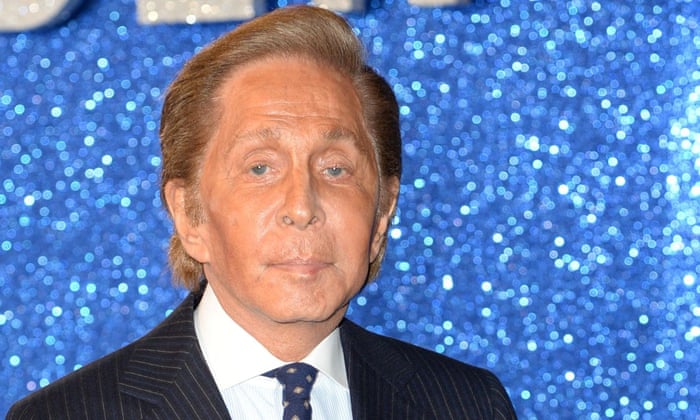
Valentino Garavani

The combination looks like a winning one. The so-called most fashionable opera ever to be staged has already taken almost £900,000 in advance ticket sales against a total cost of £1.3million, according to WWD.


READ MORE: http://www.telegraph.co.uk/fashion/events/keira-knightley-leads-the-stars-at-opening-of-la-traviata---the/

Saturday, May 18, 2013

Colin Firth, Emma Watson: Cannes Film Festival Million Dollar Jewelry Heist - Just like To Catch a Thief (POLICYMIC) BY Shwetika Baijal


Thursday night at Cannes Film Festival was just another round of lavish beach-side parties thrown by Bulgari and Calvin Klein where luminaries like Harvey Weinstein, Colin Firth, Nicole Kidman, and Rooney Mara talked about important things. None of them could imagine that one of the biggest heists in Cannes' history was going down at the same time as they were fussing about their hair frizzing up in the rain. Jewels from the Swiss luxury jeweler Chopard were stolen when a safe was ripped clean from the wall of Hotel Novotel, blocks from the Cannes red carpet.

The jewels were to be loaned out to celebrities to wear on the red carpet during the two-week festival. Chopard is a sponsor of the festival and also designs the coveted the Palme d'Or prize given to the best film. The Palme d'Or was spared. The daring heist added a layer of intrigue to the festivities as police are investigating the details of the robbery. The hotel room belonged to a Chopard employee and police in Nice believe it was carried out by one thief at 5 a.m., according to French media reports. Police also told The Hollywood Reporter that they suspect it may be an "inside job" and are questioning hotel employees.

cannes, jewelry, heist:, $1, million, in, celebrity, jewels, stolen,

In classic Hollywood fashion, there's also an ironic twist. The heist occurred the same night that Sofia Coppola's THE BLING RING, a tabloid-y tale about teenagers robbing celebrities, premiered at Cannes. Emma Watson has been professing her innocence of the robberies. The heist is also recalling many a reference to the suave cat-burglar Cary Grant played in Hitchcock's To Catch a Thief, which also depicted the Riviera's irreverence being disturbed.

The investigation is ongoing, but let's just indulge in our Cary Grant fantasies for now:


READ MORE: http://www.policymic.com/articles/42863/cannes-jewelry-heist-1-million-in-celebrity-jewels-stolen

Saturday, December 31, 2011

A bird's eye view of 2011's best flicks (BUENOS AIRES HERALD)

A bird’s eye view — with some well-deserved attention to detail — of 2011’s best flicks

By Julio Nakamurakare
Herald staff

With few exceptions, movie distribution and exhibition do not always meet filmgoers’ expectations. You see, apart from quality, timeliness is also of utter relevance when it comes to film openings.
The general impression is that the higher the expectation and the longer the wait, the highest expectations will run. Correct as the perception may sound, technology has made it possible — over the last few years — to abate cinephiles’ burning desire for promised, long-awaited goodies.

It’s the fast, easy access to HD trailers and samples on the Web we’re talking here. Availability having gone global, distributors would do well not to hold back new releases until the filmgoing season is in full swing — namely, autumn and winter, and the early months of spring.

True, distributors do not conduct their business based solely on a whim — they depend on screen availability and tough competition for a slot in the exhibitors’ schedule. The sinergy between both sectors, if and when it materializes, normally works wonders.

Looking back on as far as January and February this year — feels like ages ago, doesn’t it, so much has happened here and elsewhere — we were blessed by the sages, who gave a proper release date to two extraordinary movies: The King’s Speech and Somewhere.

SPEECHLESS

It was a royal treat to see British actor Colin Firth on back-to-back winning performances: in Tom Ford’s A Single Man, a memorable adaptation of a Christopher Isherwood novel-memoir. Come Oscar time, Mr. Firth was pitted against Jeff Bridges in the unremarkable Crazy Heart. Firth lost his statuette to Bridges, and this year they were once again vying for the trophy.

Justice was made when Firth won Best Actor for his role as Albert, Duke of York, the future King George VI, the royal stammerer who overcame his speech impediment to steer a nation and an empire toward leadership in times of world turmoil.

Plagued by dreaded stammer and unsure personality, and considered unfit to be king, Albert was never expected to reach the throne. His elder brother, the easy-going and charming Edward (Guy Pearce) was first in line to the crown.

For Bertie, the Duke of York, Edward’s abdication was sheer tragedy. He had never expected or wished to be King, in the same manner that his wife, Lady Elizabeth Bowes-Lyon (Elena Bonham-Carter) loathed any prospective royal duties.

As retold in The King’s Speech — and this is one of the film’s wisest choices — Elizabeth comes out as an adoring, downright, practical and courageous woman. Indeed, Elizabeth, accurately reckoning that there was no honourable way out for her husband to avoid the duties of a King, bravely decided to give her husband the support he couldn’t muster for himself.

The extraordinarily gifted actor Colin Firth makes the transition from stammer to aplomb, turning The King’s Speech into a moving account of how a man, divested of his royal dignity, accepts medical treatment and vocal training.

But The King’s Speech is much, much more than a moralizing story of how good will leads to success. It is a long, arduous and painful journey — the transmogrification of an unsure man into a true leader.

Rather than a drill in elocution and proper enunciation, The King’s Speech, with its royal command of narrative and extraordinary ensemble performances, is a profound lesson in humanity.

SOMEWHERE.

Literature students at any level are almost always asked to define in one sentence what a novel, short story, play or poem boil down to beyond plotline twists and characterization. In this regard, Sofia Coppola’s little cinematic gem Somewhere (2010) may prove a hard nut to crack. Somewhere is so richly minimalistic that it may well be condensed as “glamorous action movie star learns to see the emptiness of his life through the eyes of his 10-year-old child.” No more, no less.

Far from contrived, Somewhere may be deemed pedestrian in terms of linear storytelling. However, reflecting as it does Ms. Coppola’s own Hollywood / nomadic upbringing courtesy of her father, Francis Ford Coppola, Somewhere leaves self-referential games aside to examine, with rarely seen depth, the musings of a man on the edge of 40 who refuses to grow up.

In Sofia Coppola’s world there’s an impersonal yet comfortable element called a non-place, the epitome of which are, of course, hotels, synonym with things transient and life on the move. As a lifestyle choice, hotels — the ones you stay at temporarily or as a permanent home — are the closest embodiment of the Billie Holliday aching assertion that she’s travelling light to unburden the heavy weight of loss. Delightfully convenient and cozy, Sofia Coppola envisions hotels as a strange combination of non-place and home.

Looking back to Coppola’s Lost in Translation (2005), in which the Bill Murray and Scarlett Johansson characters find their true selves in the empty shell of an ultramodern concrete and glass hotel tower in neon-lit Tokyo, Somewhere is the logical closure to a splendid duology about existential malaise and the mutual comfort shared by two strangers who create a tight bond out of their need for human connection.

Briefly told, Somewhere’s plotline is disquietingly and comfortably close to Lost in Translation: Ms. Coppola’s affinity with non-places and her sweetly ironical view of mundane affairs collides with her characters’ unease.

In Somewhere, two people (part-time father and part-time daughter) rejoice in their shared taste for leisure and guilty pleasures. But Leo (Elle Fanning) is a rather neglected ten-year old child, and Johnny, her movie star father (Stephen Dorff), in his late 30s, still plays make believe on and offscreen.

When his daughter Cleo arrives for a weekend stay with her dad, there’s not much of a change in Johnny’s routine, save for the addition of Cleo’s Playstation and other toys. But Cleo’s short stay is stretched to several weeks after her mother unexpectedly announces that she needs some time off for herself. Ever the roguish kind, Johnny takes Cleo on a life-changing and mutually affecting journey.

It is through the eyes of Cleo that the infantile Johnny begins to understand that his carefree, homme jeune lifestyle cannot last forever, and that he’s been missing out on his daughter’s childhood.

Ms. Coppola’s social and personal observation powers are seen through chunks of individual lives’ routines. These are present as much in L.I.T. as in Nowhere, er, that is, Somewhere, which could, in turn, be Johnny Marco’s own Everywhere. There’s no two ways about Somewhere: you either hate it viscerally for its apparently motionless pace, or you embrace it for its loveable candor and sweetly aching intensity.

FLYING COWS.

After his directorial début La suerte está echada (2005), screenwriter-producer-director Sebastián Borensztein came up with the highly original Un cuento chino, a perfect example of how to turn a trite, cliched and formulaic story into an appetizing commodity.

Defying almost every narrative convention, Borensztein clearly calls the shots when it comes to rethinking and reshaping the simplest plotline into the synthesis of all that’s needed to make an old sales pitch as fascinating as when first heard.

Borensztein’s Un cuento chino, starring the amazingly versatile actor Ricardo Darín, has all the makings of just another conman’s tale: it is grandiose at the outset, and impressive and jaw-dropping as it moves on.

Like any efficient narrative, Un cuento chino negotiates the terms of mutual understanding between filmmaker and audiences by laying out the bare facts in the simplest of manners.

The lead character, Roberto (Darín) is presented for who he is: your average guy from the block, around 50, the owner of a hardware store who goes grumpily about business in general and about life in particular.

Ordinary man, ordinary life. Unbelievably odd circumstance makes the irritable Roberto and a newly arrived Chinese immigrant the strangest bedfellows. What follows is the essence of Un cuento chino — an intriguing, risible comedy with perfect timing, impeccably choreographed by director Borensztein.

Unjustifiably passed off for consideration as Argentina’s submission for the Oscar for Best Foreign Picture (it lost to the horrendous Aballay, el hombre sin miedo), Un cuento chino spins an expected yarn, adding new textures of drama to a sidesplitting comedy. In classical fashion, the two genres (drama and comedy) converge on a place called “perfectly executed drama-cum-comedy.” A true winner.
 
THE MORAL DILEMMA.

With no publicity machinery behind it and relying only on word-of-mouth praise and recommendation, Santiago Mitre’s independently-produced El estudiante took no time to become the hottest ticket in town in spite of its limited release.

At a time of political apathy and disbelief, it is as though El estu - diante, with its poignant story about political activism, elicited an irrepressible need to discuss it at length, to check out whether or not one’s views coincide with one’s peers, regardless of political leaning or affiliation.

At first glance, El estudiante, scripted by the director himself, is structured around the same good old narrative pattern: rise and fall, loss of innocence, the apparently inexorable road to corruption of somebody who learns the hard way that there’s no room in this world for utopias or ideology. As if the ghost of Francis Fukuyama had returned to haunt us back.

The estudiante in question, Roque Espinosa (a rousing, moving performance by actor Esteban Lamothe) is the embodiment of William Blake’s Lamb, to give you an obvious literary reference.

Neither lamb nor tiger, Roque Espinosa must find a way to shake off his all-pervading apathy. At first, his only obsession is jumping from bed to bed with fellow students. But there comes a fateful day when he stumbles upon a beautiful assistant teacher, Paula Castillo, an ardent believer in action as the engine for social change. Paula informs Roque with the kind of self-questioning that shakes anyone’s convictions. Roque, now lover-student, feels the imperative need for commitment to a cause.

An accurate depiction of students’ political activism and struggle for power El estudiante has a thought-provoking kind of analysis that, without overemphasis, sends us back to the days when consensus and dissent were the two faces of sociopolitical concern, opening half-closed eyes to the shattering realization that conviction grows as much from honest belief as it does from personal convenience. The social phenomenon surrounding El estudiante is due, most likely, to the self-questioning that reflects the audiences’ very own need for commitment.

WOODY MEETS SCOTTY.

Once the definitive Manhattanite who never crossed the Brooklyn Bridge — as if Brooklyn and farther off territories were off bounds — filmmaker Woody Allen, due to personal problems made public, had to flee to Europe.

Allen-Paris is a match made in Heaven (remember his remarkably alluring love paean to Paris entitled Everyone Says I Love You?). Leaving behind his neurotic, self-inflicted misanthropy, his half-comic fear of imminent death at every turn and his profoundly anti-American bitterness, Mr. Allen’s Midnight in Paris is a gem you do no want to miss.

At first sight, the film looks no different than a glossy tourism brochure. Nothing wrong with that, for Mr. Allen bathes Paris in a glowing light, so magical and spellbinding that it makes viewers promise themselves that their next travel destination will be Paris. Mr. Allen’s Paris, that is.

With slight variations, most Allen characters during his US phase were self-replicating, ruminating little men for whom New York functioned as an umbilical cord located at the centre of the universe.
Perennially typecast as a moronic loser, comedian Owen Wilson landed the role of a lifetime in Mr. Allen’s Midnight in Paris, as a novelist suffering from near-chronic writer’s block.

In Mr. Allen’s imaginary Parisian scenario, his alter ego ambles the streets of Montmartre and makes the acquaintance of the whole roster of the artists and intellectuals who sought refuge there in the 1920s. Scott Fitzgerald, Zelda? They’re there, of course, as are Picasso, Dalí, Gauguin, Toulouse Lautrec, Gertrude Stein, Hemingway. Avoiding the repetitious foibles and eccentricities of his previous alter egos, Mr. Allen presents us with ridiculously obvious scenes in an enrapturing manner.

An unforgettable odyssey and epiphany, if you ask me.

IL VERO NANNI.

Italian filmmaker Nanni Moretti (Caro diario, 1993; La stanza del figlio, 2001) has often been compared with Woody Allen, mostly on account of his humorously self-deprecating leads, almost always played by himself. If Moretti’s summertime scooter rides-ruminations were as pervasively insightful as they were hilarious, then Habemus Papam (2011) is heresy in that it posits psychoanalysis as the last resource to cure a depressed Pope.

Moretti’s take on the Catholic Church’s unbreakable mandates starts out as a comedy full of pungent, sardonic, acid humour, and goes on to perform all the sacraments of the Roman Catholic Church with an earth-shattering approach.

Habemus Papam, fortunately, is an intelligently articulated vision of things sacred. In veritable Catholic fashion, the film starts out with interior monologues easily equated with the culpable musings of bishops gathered to get to pick a new Pope from among themselves.

Enter Moretti’s unorthodox psicoanalista and the new Pope, frightful and emotionally unstable, tries to confront his demons. Once again, Mr. Moretti proves that he has been blessed with an uncanny talent to turn the trite into an appetizingly sinful dish.

A benediction, anyone?

FATHER & SON REUNION.

Made on a shoestring budget by a crew of two (director and cameraman-sound recordist), Alamar, by Mexico’s Pedro González Rubio, is a delicious, beautiful, deceivingly simple depiction of a rite of passage.

Shot in the breathtaking Chinchorrillo coral reef reserve, Alamar stars three generations of real-life folk — granpa, dad and grandson — as they enjoy the first, and may be the last, opportunity to spend time together. Alamar is about a blissful reunion and the painful, inexorable fact of life that all things, good and bad, must pass. If tears roll down your eyes by the time Alamar’s 73-minute run come to an end, it’s simply because the film is laceratingly beautiful.

DANCE AWAY THE HEARTACHES.

The sinergy between dancer-choreographer Pina Bausch and filmmaker Wim Wenders is like an angelic conversation between two larger-than-life artists.

Tapping into and then adapting German expressionism, which swept all art forms in Weimar Germany and 1920s Vienna, Bausch, with her innovative technique and creative process, created an elaborate form of composition and performance that came to be known asTanztheater, or “dance-theatre.”

In spite of the understandable efforts to conceptualizeTanztheater, Bausch’s creation is more than just a “blend” of dance and dramatic elements traditionally associated with the theatre.

Bausch’s best known dance-theatre work is perhaps the nostalgia-ridden, melancholy Café Müller (1978), an unconventional piece in which dancers swirl around themselves and their fellow performers, crashing against tables and chairs — the material representation of everything that grounds our bodies and souls. No less remarkable and thrilling is Rite of Spring (1975), a suavely provocative staging introducing the notion that carnal urges and spiritual quests are not necessarily at odds.

Wenders’ Pina, is a compact, eloquent biopic that, in formal terms, does not seem to veer off the trodden path. On closer scrutiny, however, you realize that the combination and editing of footage of Bausch in conversation and talking straight to the camera, and the devastatingly beautiful fragments from the seminal Café Müller and The Rite of Spring are one single, dazzling piece about loss and sorrow, affliction and resurrection.

Pina is palpable evidence that Wenders has reached the pinnacle of his creativity and craftsmanship, leaving any form of accoutrement aside.

Pina Bausch was quoted as asking, “What are we longing for? Where does all this yearning come from?”

Although her collaboration with Wenders provides no explicit answer, Pina does come close to elucidating existential questions we rarely dare ask ourselves.

MEDITERRANEAN CINEMA.

The three films hailing from the mediterranean province of Córdoba — De Caravana, Hipólito and El invierno de los raros — are the ones that nearly got away.

Spearheading the threesome release, Rosendo Ruiz’s De caravana resorts to an often used — sometimes overused and misused — narrative device.

De caravana, set against the background of a show by the legendary cuarteto singer Carlos “La Mona” Jiménez, follows an upper class young man turned impromptu photographer in search of an answer to social stratification issues. De caravana, with its unpretentious yet pungent exploration of an underworld close to the surface — too close for comfort — is a wild, joyous travelogue through the divides that hold together the multidimensional sides of folk like us.

The second feature in the Córdoba “trilogy,”Hipólito, by Teodoro Ciampagna, switches from cuarteto celebration of the here and now to a historical event — the so-called “década infame,” during which political confrontation resulted in horrendous bloodshed. Odd as it may sound, Hipólito is no different from De caravana in its distant-close approach to different themes and genres.

Wrapping up the trilogy, Rodrigo Guerrero’s El invierno de los raros bears a mesmerizing title but carries a forthright message, if you like the kind of introspection commonly associated with the New Argentine Cinema. El invierno de los raros, however, does not quite fit the mould.

Strangely formatted but irresistibly compelling, the “raros” in question are ordinary townsfolk who choose to perform rather than question their actions. Although none of these people could be labelled “non-conformists,” it’s quite evident that, deep inside, they’re all seeking some form of fulfillment that constantly eludes them. Dull and grey on the surface, El invierno de los raros comes full circle with an unexpected final outburst of “cuarteto” joie de vivre.

Need we say that we want more, ye Córdoba filmmakers?


Wednesday, September 28, 2011

HENRY CAVILL, LUKE EVANS

Joining the immortals: Stephen Dorff interview


Stephen Dorff, star of the Greek-legends action film Immortals, says his bad-boy reputation is a bit of a myth.

Stephen Dorff in Immortals
By Craig McLean (The Telegraph - telegraph.co.uk)
24 Sep 2011

At a picnic bench in the woods in Topanga Canyon, a few miles from his Malibu home, Stephen Dorff is flicking through Vanity Fair's International Best-Dressed List 2011. Jenson Button is included, plus President Obama and some minor royalty. The acting world is represented by Colin Firth and Justin Timberlake. Dorff peers at a picture of Stavros Niarchos. He recognises him from the Los Angeles nightlife scene – the shipping heir, or 'money guy', as Dorff calls him, once dated Paris Hilton.

Sparking up the first of a fistful of Camel Blues that this unfashionably enthusiastic nicotine fan will work his way through during our interview, Dorff says that his personal style is less high-roller than the immaculately suited-and-booted Vanity Fair honorés. Judging by his outfit today, given the option, he's a work-boots'n'jeans'n'white T-shirt kinda guy. 'But we did a bunch of fancy, stylish shoots for Somewhere when I was working with Sofia, because she's pretty stylish. We were talking about doing some jeans campaign together.'

Sofia is Sofia Coppola, the director, photographer and one-time fashion designer. Somewhere is her award-winning 2010 film, which rebooted the career of Dorff, 17 years after he had shot to fame in Backbeat, the Hamburg-era Beatles biopic. 'When we did the world [promotional] tour for Somewhere I had a bunch of cool suits given to me,' Dorff continues. 'Tom Ford was doing all my tuxes. It was pretty pimpy,' he grins through a cloud of cigarette smoke. At last September's Venice Film Festival, where Somewhere won the Golden Lion, 'I felt like James Bond. Tom made me this bad-ass tux – classic, bow-tie, vest [waistcoat]. It was pretty dope. And I got a bunch of cool Burberry suits, and some Dolce & Gabbana stuff. I'm doing another shoot this week that's all Gucci. I don't have one specific fave label. I like Band of Outsiders,' he says of the preppy-with-a-twist American label that recently signed the Harry Potter graduates Rupert Grint and Tom Felton to model its latest collection.

The success of Somewhere means that Dorff's career is back on track after more than a decade of under-performing films. Relaxed and studiously cool, he wants me to know that his 'funny haircut' is nothing to do with his normal 'look'. It's a hangover from Boot Tracks, a recently completed film starring Willem Dafoe in which he plays an ex-convict and which he describes as 'kinda like Badlands'.

In the forthcoming Immortals, a Greek myth-inspired, sword'n'sandals action movie, there were further style concerns. Dorff plays Stavros, a slave whose master, Theseus, is out to avenge the death of his mother. The big-budget film is directed by Tarsem Singh and also stars Mickey Rourke and, in the role of Theseus, the young English actor Henry Cavill, recently cast as Superman in Zack Snyder's Man of Steel. Singh is a former pop-video maker (REM's Losing My Religion) and advertising creative (the Levi's Mad about the Boy swimming-pool commercial) who, as a film director (The Cell, The Fall), is renowned for his visual flair. On the 3D Immortals, this means extravagant special effects and fight scenes, and what we might call directional men's fashion. Freida Pinto, the Slumdog Millionaire star, has what is effectively the only female role. She says that, for once, it was the men who had to wear the short skirts – 'and sometimes no skirts at all!'

'Yeah, I left the skirts up to the Brits on that one,' chuckles Dorff, referring to Cavill and Luke Evans, who plays Zeus. 'I dodged the skirt.' He also managed to avoid chest-waxing. 'Tarsem wanted no body hair… Some of the kids were waxed, but they got this chest acne. I just did it with an electric razor.' This seasoned 38-year-old was firm with his director. 'I told Tarsem, I ain't waxing!'

It's all a far cry from Somewhere. In Sofia Coppola's follow-up to her 2006 historical romp, Marie Antoinette, Dorff played Johnny Marco, a high-profile actor holed up in Chateau Marmont, the LA hotel beloved of the profession. Marco was either mired in an existential crisis, or just really, really bored. The low-key, low-drama, slow-burning film showed slovenly Marco drifting from in-room pole-dancing session to pointless party to soul-sapping promotional junket, via helicopter rides and stints tooling around LA in his Ferrari F430. When his ex asks him to look after their 11-year-old daughter, her arrival brings sudden, if fleeting, responsibility and sobriety into Marco's self-indulgent life.

Despite its triumph at Venice, Somewhere received mixed reviews. 'Detail-oriented subtlety' is how Dorff describes the script, which is minimal even by the standards of Coppola's famously spare writing style. Compared with the 80-day, 15-camera, cast-of-thousands Immortals shoot, it was 'intimacy to the extreme', Dorff reflects. Somewhere was a Hollywood insider's movie, made by an insider (Sofia's father is the director Francis Ford Coppola; her cousins are the actors Nicolas Cage and Jason Schwartzman) and starring an insider, who is also one of her oldest friends – both being the children of Hollywood professionals, Stephen and Sofia moved in the same circles in their youth. 'I just love it,' Dorff concludes. 'I love what she does. I love the experience and the partnership she creates with her lead actor. It was like nothing I'd experienced.'

Friendship aside, Dorff has good reason to sing the praises of Somewhere, which restarted his life in myriad ways (not least romantically – he has been dating an Italian girl who works for Sky, whom he met on promotional duties in Paris: 'That's been interesting,' he says with a smile). In his early twenties he was seen as one of the biggest young film stars in the world. In Iain Softley's Backbeat, the teenage Californian impressed in the role of Stuart Sutcliffe, the founding member of the Beatles who gave up music for love in the band's early days in Hamburg, before dying of a brain haemorrhage aged 21. 'Stephen had incredible enthusiasm,' Softley recalls. 'He had just done a South African film called The Power of One and he asked if he could do the audition with that South African accent to show us that he was able to master another accent.

'He had this androgyny that Stuart Sutcliffe had,' Softley adds, 'but he's also very masculine. That's often something rock stars have, and Stephen had it, too.'

Ian Hart, who played John Lennon in the film, says that the friendship he and Dorff formed onset remains firm to this day. 'Stephen seemed so right for the part. He had that self-assured cool, tempered with the vulnerability the character needed.'

Back in Hollywood Dorff received a reported seven-figure sum to play the villain in the 1998 vampire action film Blade. He appeared on the cover of style and entertainment magazines and cultivated a moody, hard-partying, bad-boy image. He also gained an ill-deserved (he says) reputation as a womaniser. For the record, he says, Juliette Lewis was always just a friend and never a girlfriend. 'Half the people they said I dated, I never dated,' Dorff frowns. 'Milla Jovovich – she's always been my friend, too. I've never really dated actresses except when I was really young.' What about Pamela Anderson? Yes, he confesses, they dated. 'Pam I went out with six years ago for a few months. That was interesting. Scared the shit out of my mom.' Girls Aloud's Sarah Harding? 'We dated for a minute!' he says laughing. They met when Dorff was in Britain promoting the 2006 Sky mini-series The Hades Factor. 'We had, like, two dates. We're still text buddies.'

But his early promise didn't build into leading-man status. He was considered for Titanic but lost out to Leonardo DiCaprio. He auditioned for Francis Ford Coppola's The Rainmaker, but Matt Damon beat him to the part. None of his other early, supposedly promising films – the generation-X film SFW, which satirised the cult of celebrity, or the apartheid drama The Power of One – was a critical or commercial hit. He worked solidly throughout his twenties and thirties, yet without much fanfare, in films such as Blood and Wine, City of Industry, I Shot Andy Warhol and World Trade Center.

Dorff concedes that he has been given a 'second wind' by Coppola. 'Sofia gave me such a great part and turned everything around,' he says. 'And I just haven't really stopped since that movie.' Aside from working constantly in the past year, 'I've done all the fashion magazines again – I've been photographed for the V Mens and the L'Huomo Vogues, and all these ones I didn't even know about.'

Stephen Dorff grew up in Los Angeles, where his father, Steve Dorff, worked as a composer in the film industry. One of the actor's earliest experiences of movie-making was visiting the set of Clint Eastwood's Every Which Way But Loose, on which Steve Dorff was working. (Stephen's younger brother, Andrew, a songwriter in Nashville, followed their father's career more closely.) He was a child actor in sitcoms (including Different Strokes), and made his big-screen debut aged 11 in a horror movie, The Gate. Dorff's parents separated when he was 21, a traumatic episode that coincided with his first flush of fame. Behind all the club-hopping good times lay personal anguish, and Ian Hart remembers that Dorff lived for a while in the Chateau Marmont, 'and saw first hand the "goings on" '.

Little wonder, then, that Somewhere's narrative was familiar to Dorff. Yet the film and its success have deeper resonance still for him. Dorff received news that the part was his on the first anniversary of the death of mother, Nancy, from a brain tumour at the age of 59. She had been keen for her elder son to find an acting job that would show his more 'emotional, sensitive' side. Somewhere demanded that of him, and he's self-aware enough to admit that he was in a position to deliver, still reeling as he was from her death. 'Johnny Marco was a character that was very vulnerable and trying to figure his life out at the same time,' he says, adding that he's still 'working through' his grief. 'When you lose a parent…' He stops. 'It added a lot to my life, my career, my focus, to what's important, to what's not important. And I'm still getting through it. I haven't totally cured myself. It was only three and a half years ago.' He stretches on the bench and reaches for another Camel Blue. 'I've been working so much I haven't had a chance.'

Has that been his way of processing the loss – forging ahead with professional commitments?

'Yeah, well, in a weird way that's what happened when I was losing my mom.' Michael Mann offered him a part in Public Enemies, a Prohibition-era gangster film starring Johnny Depp as John Dillinger. 'And I told him I didn't think I could do it. I said, "I don't have three months right now, I'm losing my mom." And he was a real mensch [a Yiddish word meaning 'person of integrity or honour']. He was like, "Stephen, I can have anybody I want but I want to wait for you. This is a great character part for you." And I asked my mom: "I don't want to leave you, what do I do?" And she said, "I think you should go do your movie. I think it'll make you happier, and you can always come home and see me." '

Dorff took the part, 'and the guys on that film were really sweet to me, took care of me'. Depp, as much of a music buff as Dorff – who is a keen guitarist and hopes to start writing film scores 'under another name' – was an attentive co-star and friend. 'And it was actually, in retrospect, good that I went to Chicago for those five months. Because if I was just sitting in LA that would not have been good for me…'

His mother, it seems, had led by work-focused example. 'When my parents got divorced, she used that midlife crisis and went back to school for 11 years,' he says of Nancy Dorff's retraining as a psychologist. 'That blew my mind. And that's why life is sometimes not fair – my mom could have helped so many people with her degree and being a doctor. Then she got sick…'

Dorff wears his heart on his sleeve, and his feelings on his skin: his mother's name and the dates of her birth and death are two of a dozen or so tattoos on his arms and back. Another, inscribed over his right biceps, is a saying dear to his mother: yesterday is history, tomorrow's a mystery, today is a gift, that's why they call it the present.

Dorff fingers the tattoo. 'It's also a saying that's in the Kung Fu Panda movie, as I later found out,' he says ruefully. 'Which I don't mind, I can take it for what it means to me.'

When his parents divorced he sided with his mother and was 'really pissed off' with his father, who 'went off with the young woman'. Now his relationship with his father is fine, and he's a doting big brother to his half-sisters, 11-year-old Kaitlyn and 10-year-old Callie. Kaitlyn, like many American adolescents, is a keen customer of Kitson, and Dorff recently took her and a friend shopping at the chain's Malibu outlet. Dorff, like many a man before him, spent the time mooching around outside the shop, smoking fretfully. 'Kaitlyn picked up a ton of stuff, $100, $200 items,' he says, 'then she said I had to get her friend stuff, too.' He capitulated and emptied his wallet. 'So anyway, that's become my life. I love it, though – it's nice to have these little girls in my life.'

It's a long way from his mean-and-moody early twenties, when he criticised his own films in the press and wore sunglasses 24/7. 'I was… outspoken,' he admits. 'I used a lot of my anger and things in my personal life in the press that I shouldn't have done. I learnt my lesson from that.'

But, really, he wonders, in the Hollywood bad-boy scheme of things, was he that off-the-rails? 'I've never been arrested!' he exclaims. 'I said this to my agency a while back. After I got Somewhere, they said, "This is our new Robert Downey Jr!" And I was like, "Come on, guys. Downey's a genius, but I've really never done anything that bad. Smoked some pot along the way but what the f***, guys?" That was funny.

'But God bless,' Dorff says, sparking up a final cigarette. 'I love it when guys that have had issues come back. And luckily I haven't had' – he knocks on the wooden picnic bench – 'those kinds of issues. I've just had some things to deal with like family stuff, you know, lost my mom. Which is the most difficult stuff I've gone through. But it's just normal human stuff.'

'Immortals' is released on November 11

via @LukeEvans_News/Twitter

Saturday, September 24, 2011

Joining the immortals: Stephen Dorff interview

The Telegraph

Joining the immortals: Stephen Dorff interview

Stephen Dorff, star of the Greek-legends action film Immortals, says his bad-boy reputation is a bit of a myth.

Stephen Dorff in Immortals
Sparking up the first of a fistful of Camel Blues that this unfashionably enthusiastic nicotine fan will work his way through during our interview, Dorff says that his personal style is less high-roller than the immaculately suited-and-booted Vanity Fair honorés. Judging by his outfit today, given the option, he's a work-boots'n'jeans'n'white T-shirt kinda guy. 'But we did a bunch of fancy, stylish shoots for Somewhere when I was working with Sofia, because she's pretty stylish. We were talking about doing some jeans campaign together.'
Sofia is Sofia Coppola, the director, photographer and one-time fashion designer. Somewhere is her award-winning 2010 film, which rebooted the career of Dorff, 17 years after he had shot to fame in Backbeat, the Hamburg-era Beatles biopic. 'When we did the world [promotional] tour for Somewhere I had a bunch of cool suits given to me,' Dorff continues. 'Tom Ford was doing all my tuxes. It was pretty pimpy,' he grins through a cloud of cigarette smoke. At last September's Venice Film Festival, where Somewhere won the Golden Lion, 'I felt like James Bond. Tom made me this bad-ass tux – classic, bow-tie, vest [waistcoat]. It was pretty dope. And I got a bunch of cool Burberry suits, and some Dolce & Gabbana stuff. I'm doing another shoot this week that's all Gucci. I don't have one specific fave label. I like Band of Outsiders,' he says of the preppy-with-a-twist American label that recently signed the Harry Potter graduates Rupert Grint and Tom Felton to model its latest collection.
The success of Somewhere means that Dorff's career is back on track after more than a decade of under-performing films. Relaxed and studiously cool, he wants me to know that his 'funny haircut' is nothing to do with his normal 'look'. It's a hangover from Boot Tracks, a recently completed film starring Willem Dafoe in which he plays an ex-convict and which he describes as 'kinda like Badlands'.
In the forthcoming Immortals, a Greek myth-inspired, sword'n'sandals action movie, there were further style concerns. Dorff plays Stavros, a slave whose master, Theseus, is out to avenge the death of his mother. The big-budget film is directed by Tarsem Singh and also stars Mickey Rourke and, in the role of Theseus, the young English actor Henry Cavill, recently cast as Superman in Zack Snyder's Man of Steel. Singh is a former pop-video maker (REM's Losing My Religion) and advertising creative (the Levi's Mad about the Boy swimming-pool commercial) who, as a film director (The Cell, The Fall), is renowned for his visual flair. On the 3D Immortals, this means extravagant special effects and fight scenes, and what we might call directional men's fashion. Freida Pinto, the Slumdog Millionaire star, has what is effectively the only female role. She says that, for once, it was the men who had to wear the short skirts – 'and sometimes no skirts at all!'
'Yeah, I left the skirts up to the Brits on that one,' chuckles Dorff, referring to Cavill and Luke Evans, who plays Zeus. 'I dodged the skirt.' He also managed to avoid chest-waxing. 'Tarsem wanted no body hair… Some of the kids were waxed, but they got this chest acne. I just did it with an electric razor.' This seasoned 38-year-old was firm with his director. 'I told Tarsem, I ain't waxing!'
It's all a far cry from Somewhere. In Sofia Coppola's follow-up to her 2006 historical romp, Marie Antoinette, Dorff played Johnny Marco, a high-profile actor holed up in Chateau Marmont, the LA hotel beloved of the profession. Marco was either mired in an existential crisis, or just really, really bored. The low-key, low-drama, slow-burning film showed slovenly Marco drifting from in-room pole-dancing session to pointless party to soul-sapping promotional junket, via helicopter rides and stints tooling around LA in his Ferrari F430. When his ex asks him to look after their 11-year-old daughter, her arrival brings sudden, if fleeting, responsibility and sobriety into Marco's self-indulgent life.
Despite its triumph at Venice, Somewhere received mixed reviews. 'Detail-oriented subtlety' is how Dorff describes the script, which is minimal even by the standards of Coppola's famously spare writing style. Compared with the 80-day, 15-camera, cast-of-thousands Immortals shoot, it was 'intimacy to the extreme', Dorff reflects. Somewhere was a Hollywood insider's movie, made by an insider (Sofia's father is the director Francis Ford Coppola; her cousins are the actors Nicolas Cage and Jason Schwartzman) and starring an insider, who is also one of her oldest friends – both being the children of Hollywood professionals, Stephen and Sofia moved in the same circles in their youth. 'I just love it,' Dorff concludes. 'I love what she does. I love the experience and the partnership she creates with her lead actor. It was like nothing I'd experienced.'
Friendship aside, Dorff has good reason to sing the praises of Somewhere, which restarted his life in myriad ways (not least romantically – he has been dating an Italian girl who works for Sky, whom he met on promotional duties in Paris: 'That's been interesting,' he says with a smile). In his early twenties he was seen as one of the biggest young film stars in the world. In Iain Softley's Backbeat, the teenage Californian impressed in the role of Stuart Sutcliffe, the founding member of the Beatles who gave up music for love in the band's early days in Hamburg, before dying of a brain haemorrhage aged 21. 'Stephen had incredible enthusiasm,' Softley recalls. 'He had just done a South African film called The Power of One and he asked if he could do the audition with that South African accent to show us that he was able to master another accent.
'He had this androgyny that Stuart Sutcliffe had,' Softley adds, 'but he's also very masculine. That's often something rock stars have, and Stephen had it, too.'
Ian Hart, who played John Lennon in the film, says that the friendship he and Dorff formed onset remains firm to this day. 'Stephen seemed so right for the part. He had that self-assured cool, tempered with the vulnerability the character needed.'
Back in Hollywood Dorff received a reported seven-figure sum to play the villain in the 1998 vampire action film Blade. He appeared on the cover of style and entertainment magazines and cultivated a moody, hard-partying, bad-boy image. He also gained an ill-deserved (he says) reputation as a womaniser. For the record, he says, Juliette Lewis was always just a friend and never a girlfriend. 'Half the people they said I dated, I never dated,' Dorff frowns. 'Milla Jovovich – she's always been my friend, too. I've never really dated actresses except when I was really young.' What about Pamela Anderson? Yes, he confesses, they dated. 'Pam I went out with six years ago for a few months. That was interesting. Scared the shit out of my mom.' Girls Aloud's Sarah Harding? 'We dated for a minute!' he says laughing. They met when Dorff was in Britain promoting the 2006 Sky mini-series The Hades Factor. 'We had, like, two dates. We're still text buddies.'
But his early promise didn't build into leading-man status. He was considered for Titanic but lost out to Leonardo DiCaprio. He auditioned for Francis Ford Coppola's The Rainmaker, but Matt Damon beat him to the part. None of his other early, supposedly promising films – the generation-X film SFW, which satirised the cult of celebrity, or the apartheid drama The Power of One – was a critical or commercial hit. He worked solidly throughout his twenties and thirties, yet without much fanfare, in films such as Blood and Wine, City of Industry, I Shot Andy Warhol and World Trade Center.
Dorff concedes that he has been given a 'second wind' by Coppola. 'Sofia gave me such a great part and turned everything around,' he says. 'And I just haven't really stopped since that movie.' Aside from working constantly in the past year, 'I've done all the fashion magazines again – I've been photographed for the V Mens and the L'Huomo Vogues, and all these ones I didn't even know about.'
Stephen Dorff grew up in Los Angeles, where his father, Steve Dorff, worked as a composer in the film industry. One of the actor's earliest experiences of movie-making was visiting the set of Clint Eastwood's Every Which Way But Loose, on which Steve Dorff was working. (Stephen's younger brother, Andrew, a songwriter in Nashville, followed their father's career more closely.) He was a child actor in sitcoms (including Diff'rent Strokes), and made his big-screen debut aged 11 in a horror movie, The Gate. Dorff's parents separated when he was 21, a traumatic episode that coincided with his first flush of fame. Behind all the club-hopping good times lay personal anguish, and Ian Hart remembers that Dorff lived for a while in the Chateau Marmont, 'and saw first hand the "goings on" '.
Little wonder, then, that Somewhere's narrative was familiar to Dorff. Yet the film and its success have deeper resonance still for him. Dorff received news that the part was his on the first anniversary of the death of mother, Nancy, from a brain tumour at the age of 59. She had been keen for her elder son to find an acting job that would show his more 'emotional, sensitive' side. Somewhere demanded that of him, and he's self-aware enough to admit that he was in a position to deliver, still reeling as he was from her death. 'Johnny Marco was a character that was very vulnerable and trying to figure his life out at the same time,' he says, adding that he's still 'working through' his grief. 'When you lose a parent…' He stops. 'It added a lot to my life, my career, my focus, to what's important, to what's not important. And I'm still getting through it. I haven't totally cured myself. It was only three and a half years ago.' He stretches on the bench and reaches for another Camel Blue. 'I've been working so much I haven't had a chance.'
Has that been his way of processing the loss – forging ahead with professional commitments?
'Yeah, well, in a weird way that's what happened when I was losing my mom.' Michael Mann offered him a part in Public Enemies, a Prohibition-era gangster film starring Johnny Depp as John Dillinger. 'And I told him I didn't think I could do it. I said, "I don't have three months right now, I'm losing my mom." And he was a real mensch [a Yiddish word meaning 'person of integrity or honour']. He was like, "Stephen, I can have anybody I want but I want to wait for you. This is a great character part for you." And I asked my mom: "I don't want to leave you, what do I do?" And she said, "I think you should go do your movie. I think it'll make you happier, and you can always come home and see me." '
Dorff took the part, 'and the guys on that film were really sweet to me, took care of me'. Depp, as much of a music buff as Dorff – who is a keen guitarist and hopes to start writing film scores 'under another name' – was an attentive co-star and friend. 'And it was actually, in retrospect, good that I went to Chicago for those five months. Because if I was just sitting in LA that would not have been good for me…'
His mother, it seems, had led by work-focused example. 'When my parents got divorced, she used that midlife crisis and went back to school for 11 years,' he says of Nancy Dorff's retraining as a psychologist. 'That blew my mind. And that's why life is sometimes not fair – my mom could have helped so many people with her degree and being a doctor. Then she got sick…'
Dorff wears his heart on his sleeve, and his feelings on his skin: his mother's name and the dates of her birth and death are two of a dozen or so tattoos on his arms and back. Another, inscribed over his right biceps, is a saying dear to his mother: yesterday is history, tomorrow's a mystery, today is a gift, that's why they call it the present.
Dorff fingers the tattoo. 'It's also a saying that's in the Kung Fu Panda movie, as I later found out,' he says ruefully. 'Which I don't mind, I can take it for what it means to me.'
When his parents divorced he sided with his mother and was 'really pissed off' with his father, who 'went off with the young woman'. Now his relationship with his father is fine, and he's a doting big brother to his half-sisters, 11-year-old Kaitlyn and 10-year-old Callie. Kaitlyn, like many American adolescents, is a keen customer of Kitson, and Dorff recently took her and a friend shopping at the chain's Malibu outlet. Dorff, like many a man before him, spent the time mooching around outside the shop, smoking fretfully. 'Kaitlyn picked up a ton of stuff, $100, $200 items,' he says, 'then she said I had to get her friend stuff, too.' He capitulated and emptied his wallet. 'So anyway, that's become my life. I love it, though – it's nice to have these little girls in my life.'
It's a long way from his mean-and-moody early twenties, when he criticised his own films in the press and wore sunglasses 24/7. 'I was… outspoken,' he admits. 'I used a lot of my anger and things in my personal life in the press that I shouldn't have done. I learnt my lesson from that.'
But, really, he wonders, in the Hollywood bad-boy scheme of things, was he that off-the-rails? 'I've never been arrested!' he exclaims. 'I said this to my agency a while back. After I got Somewhere, they said, "This is our new Robert Downey Jr!" And I was like, "Come on, guys. Downey's a genius, but I've really never done anything that bad. Smoked some pot along the way but what the f***, guys?" That was funny.
'But God bless,' Dorff says, sparking up a final cigarette. 'I love it when guys that have had issues come back. And luckily I haven't had' – he knocks on the wooden picnic bench – 'those kinds of issues. I've just had some things to deal with like family stuff, you know, lost my mom. Which is the most difficult stuff I've gone through. But it's just normal human stuff.'
'Immortals' is released on November 11