RADIO TIMES
By Ellie Walker-Arnott
Thursday 21 August 2014 at 11:55AM
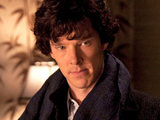
A host of famous faces will be joining Sherlock star Benedict Cumberbatch in the second run of Shakespeare adaptations The Hollow Crown.
We already knew that Cumberbatch was poised to play Richard III in The Hollow Crown: The Wars of the Roses, a three-parter which will consist of Henry VI parts 1 and 2 and Richard III, but the BBC has now confirmed that he'll be acting alongside stars such as Judi Dench, Downton Abbey's Hugh Bonneville and Oscar nominee Sally Hawkins.
In Richard III, Judi Dench, Sophie Okonedo and Keeley Hawes will star as Cecily, Duchess of York, Queen Margaret and Queen Elizabeth respectively.
Cumberbatch is sure to be pleased that Dench has signed on, after he asked her if she'd join the drama during a live Q&A at Hay Festival.
Henry VI parts 1 and 2 will see Hugh Bonneville play Humphrey, the Duke of Gloucester and Sally Hawkins take on the role of his wife Eleanor, while Tom Sturridge will play an unknown role.
"To have the chance to work with some of Britain’s most talented actors is a dream come true. We couldn't be more delighted to have them on board," said executive producer Pippa Harris.
If you haven’t seen tonight’s Elementary, stop reading now. Spoilers to follow.
It finally happened. Twelve episodes into CBS’ modern day Sherlock Holmes series Elementary, Moriarty appears. Well, almost.
Elementary doesn’t follow the literary character’s trajectory as closely as another updated version, the BBC’s Sherlock. But it would be hard to imagine a Holmes who doesn’t face Moriarty — his greatest foe from Sir Arthur Conan Doyle’s novels. Many recent adaptions of Sherlock Holmes — including the aforementioned BBC show, and the Robert Downey Jr. movies — use Moriarty as the big bad. So it felt like only a matter of time before Elementary went down that path.
In the latest hour, titled “M,” Sherlock (Jonny Lee Miller) hunts down a serial killer named M, who murdered Sherlock’s beloved Irene Adler during a London killing spree. The detective/consultant was heavily involved in M’s pursuit when he worked with Scotland Yard, and now M, like Sherlock, has made his way across the pond.
Julian Fellowes had his work cut out in the final 90 minutes of this series, with eight sprawling story lines to tie up neatly with a gigantic Christmas-ready bow.
Instead, he threw the gauntlet down with a brand new character, in the form of great-niece Rose, an 18-year-old upstart who "hates London, but loves dancing". Hmmm.
The Dowager’s advice on how to treat the little smart Alec-lette was “keep smiling and never look as if you disapprove" - but that was before Rose announced she was off to the metropolis she claimed to despise, and then did a bunk to that den of iniquity, the Blue Dragon, or “the outer circle of Dante’s inferno” as Matthew Crawley would have it.
Matthew proved his manliness, looking after Rose on the dancefloor of the fabled Blue Dragon
And so, in the dying minutes of this third series, we were at last allowed a bit of nightclub feathers and flapper-dom, a sniff of the 1920s that the Crawley folk had done such a good job of hiding from until now. Strangely for someone with a war-wound who spends half his life in a dressing gown, Matthew knew instinctively how to acquit himself on the dancefloor, while he was coming over all manly and protective to boot.
If only Mary could have seen him in such cavalier stance, because the pair of them were giving the family cause for concern. Mary was just too “tired from London” and busy checking on train times to whip off the dressing gown, but it turned out there was nothing wrong with either of them. How they laughed, and kissed, and prepared to “start making babies”... ewww. Please, no. It’s like watching your parents.
Neeson disrobed down to his tiny hot-pink panties to help DeGeneres raise money for breast cancer research. It gets better. DeGeneres and a very excited audience member successfully hit a target, triggering a barrel full of water to splash down on Neeson, whose Taken 2 hits theaters this weekend. He could easily pass for British Olympic diver Tom Daley’s rugged dad!
Holliday Grainger & David Oakes Dish On ‘The Borgias’ Season Finale
“The Borgias” stars Holliday Grainger and David Oakes chat with Access about how the story will progress for their Showtime series. So, what will fans see in the season finale?
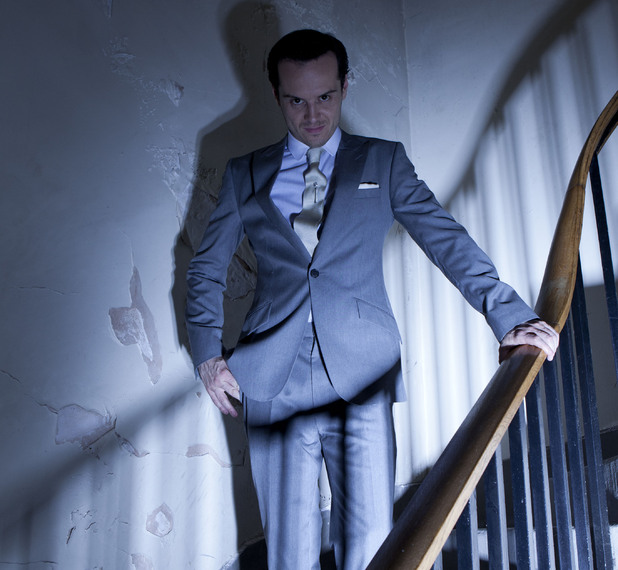
It's been well over a year since Sherlock first swept onto our screens and took the nation by storm. If you'll recall, last year's finale 'The Great Game' left us on an absolutely killer of a cliffhanger, with Sherlock (Benedict Cumberbatch) and John (Martin Freeman) caught in a deadly impasse with arch-nemesis Jim Moriarty (Andrew Scott)...
Now - one Emmy nomination, two BAFTA wins and countless other awards and plaudits later - the second series premiere, 'A Scandal in Belgravia' picks up mere moments later. And just wait till you see how Steven Moffat - writer on episode one and the show's co-creator - gets our heroes out of this particular fix!
One of the first things that struck this writer upon viewing 'Scandal' for the first time at a recent press event was just how funny it is. That's not to say that it's a 'comedy' episode - far from it. There's some marvellously funny sequences in this first episode, but they're balanced with just the right amount of action.
The action sequences are superbly handled by returning director Paul McGuigan (more on him later), while Moffat continues to exploit Sherlock and John's classic odd-couple relationship to its fullest, with the chemistry between Cumberbatch and Freeman never failing to entertain. Amongst all the action scenes, tense character moments and general derring-do, it's easy to forget just how sharp and witty a show Sherlock was, and indeed continues to be.
But there's one element from last year that's absolutely unforgettable - our dashing, wild, funny and quite possibly sociopathic hero. Benedict Cumberbatch continues to impress here - far from resting on his laurels, the actor adds subtle new shades to his central performance.
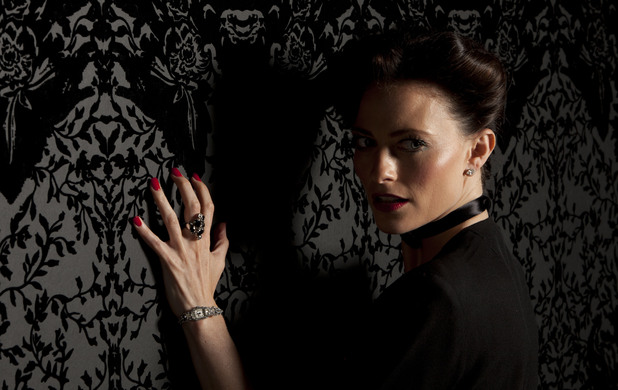
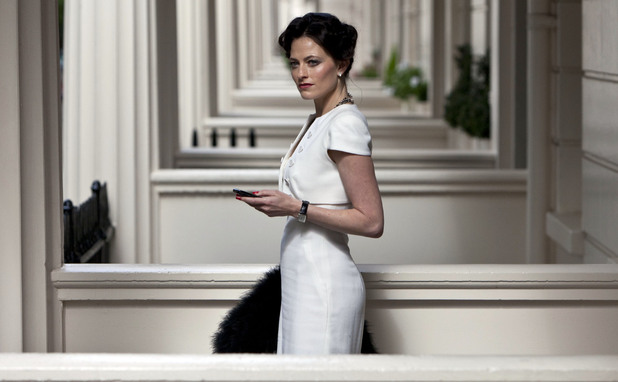
Though he's still playing the same man at heart - Sherlock is brilliantly logical, often hilariously blunt - his interactions with Lara Pulver's Irene Adler certainly breathe new life into the character. As for Pulver herself, she's perfectly cast as a modern-day Adler - a different interpretation of the character than Holmes fans may be used to.
While we can't give away specifics, we will say that Pulver brings the charm and sex appeal that the role demands in spades. There's certainly an attraction of sorts between Adler and Sherlock, though it's not nearly as simple as a 'romance'...
And let's not forget John Watson. Sherlock's partner-in-fighting-crime is too often neglected, but Martin Freeman's perfectly judged performance in series one quickly put paid to that. He remains on top form this year - one of this writer's favorite scenes from 'Scandal' doesn't feature Sherlock at all. For a brief scene, Watson takes center stage and Freeman absolutely shines.
Any preview of 'Scandal' would be incomplete without further discussion of Paul McGuigan's truly excellent work as director. The phrase "visually stunning" is perhaps thrown around a little too often, but McGuigan's work here certainly merits that description.
Certainly, watching episode one on the big screen, there were several moments that took the breath away. Thanks to McGuigan's guiding hand, Sherlock as a show is perfectly suited to contain Sherlock the character - both are effortlessly dynamic, effortlessly cool.
If this preview is in danger of sounding unremittingly positive, that's simply because 'A Scandal in Belgravia' is a fantastic piece of work - Moffat's script, McGuigan's direction and fine performances from the cast all come together to create something really special.
Our sole criticism concerns the episode's final scenes - the resolution to the 'Scandal' case is perhaps a little too far-fetched, even for Mr Sherlock Holmes. But that aside, this is a fantastic piece of television - another Conan Doyle tale has been transposed into the modern day with style and aplomb, and there are enough knowing nods to the great author's original stories to please even the most hardcore Sherlockian.
The return of Sherlock has been a long time coming, but ultimately it's well worth the wait. Now we're desperate to see episode two - Release the Hounds!
Sherlock returns to BBC One on New Year's Day at 8.10pm on BBC One.
Oh yes. It's a bit of a classic, isn't it? The BBC has always been known for its lavish costume dramas, but the absolute stand-out has to be its 1995 adaptation of the Jane Austen classic Pride and Prejudice. But what was it that made the miniseries quite so special? Let's cast our minds back...
Pride and Prejudice: Originally broadcast from September 24, 1995 to October 29, 1995
Say Pride and Prejudice these days, and it's hard not to think of Colin Firth and Jennifer Ehle. The pair have become the definitive Mr Darcy and Elizabeth Bennet, and not even the likes of Keira Knightley and Matthew Macfadyen could steal their crowns.
Obviously, a lot of the work was already done for the BBC - Jane Austen had written a blindingly good yarn, and there's a lot of story to stick your teeth into. But Pride and Prejudice must have had something else, or why would we still be swooning over the boxset more than 15 years later?
Part of the show's success has to be down to the chemistry between its leads - Colin Firth and Jennifer Ehle. Ehle is the perfect Elizabeth, confident and snarky but still loveable. And as for Firth, he was a revelation as Mr Darcy - grumpy as hell but also kind of attractive. He's the 19th century bad boy.
And it's at this point that we must absolutely mention the iconic moment of Pride and Prejudice - that lake scene. I'm not saying getting his shirt wet is the reason why Colin Firth is now such a huge A-list star, but let's be honest - it had an impact.
Suddenly, after starring in shows like The Ruth Rendell Mysteries (really), Colin was popping up in movies such as The English Patient. That Oscar win this year? It all began with Darcy.
That lake scene is ridiculous - Jane Austen didn't exactly write it, let's put it that way. But for some reason it just works. Funnily enough, Andrew Davies - who wrote the screenplay - intended it to be a humorous, bumbling, awkward moment. Instead, it got women across the country a little hot under the color and assured Pride and Prejudice's legendary status.
That's really the secret of Pride and Prejudice's success - it's as escapist as you can get. It's comforting. Like modern Sunday night favorite Downton Abbey, it's another world of big dresses and big houses and big carriages; a world where women faint at the slightest provocation; a world where getting a bit wet lands you in bed with a fever; a world where, crucially, love triumphs over all and there's a happy ending.
Yes, we always knew what we'd get with Pride and Prejudice. A lot of us already knew what happened because we'd read the book, but even if you hadn't, you could be certain that there wasn't going to be a massacre at the end where everyone died horribly (I haven't read Pride and Prejudice and Zombies yet, but I'm guessing it might be a bit more brutal.) Sometimes all you want is comfort blanket television, and Pride and Prejudice could provide that.
So we knew we'd get a "happily ever after" conclusion, but that doesn't mean there wasn't a bumpy ride along the way. There were refused proposals, dances, and, of course, the naughty Mr Wickham (elopement and all). Plenty, then, to enjoy. And audiences agreed - millions watched the show, the first run of the original VHS box set sold out within two hours, and awards followed (a BAFTA and an Emmy among them).
What's wonderful about Pride and Prejudice is that it hasn't dated. Watch it today - preferably with a mug of hot chocolate on a rainy day - and you'll enjoy it just as much. Part of that is because of the endless appeal of the costume drama - it's not like the references can become old-fashioned. But it's also due to the wonderful cast, the beautiful cinematography, and the fabulous writing. It's not unheard of for fans to plough through the entire run in one sitting.
And no-one can deny the impact Pride and Prejudice had more generally (and no, we're not just talking about the lake scene). It justified investment in costume drama (and, really, big drama productions in general); further adaptations followed, like the Keira Knightley vehicle or Bollywood-style Bride and Prejudice; and it was even the inspiration for Bridget Jones (which is why casting Colin Firth in the film was so darn inspired).
So go on. Go on! It's getting colder, the nights are drawing in, and Pride and Prejudice is waiting for you on DVD like a nice warm bath. Settle in and enjoy.
In "Moby Dick," a re-imagining of the Herman Melville classic, Gillian plays Captain Ahab's heretofore little known wife Elizabeth, who until now has been little more than a footnote to the main story. "It's an interesting juxtaposition to see [Captain Ahab] on the home front before he embarks on his journey; and the intimacy and delicacy with which he is a father and a husband, but at the same time being completely, obviously obsessed and passionate about the voyage and also this dastardly whale." Gillian jokes that "he's always had a wife, but I think she gets left behind a lot sooner in the book than she gets left behind in the miniseries."
In "Any Human Heart," Gillian plays the ubiquitous Wallis Simpson, who has recently featured in Best Picture Oscar winner "The King's Speech" (played by Eve Best) and Madonna's "W.E." (played by Andrea Riseborough), which recently premiered in Venice to mixed reviews. "Any Human Heart," spanning the twentieth century as it follows the journey of a writer who lives through a myriad of historical events, garnered four creative arts Emmy Award nominations earlier this year, and received eight BAFTA nominations (winning for Best Drama Serial), including a nod for Gillian as Best Supporting Actress.
On playing such an instantly recognisable historical figure, Gillian says that "it's kind of an obvious choice; an American living in London ... but it's quite daunting taking on somebody that people are obsessed with and have been obsessed with for a long time ... you do put yourself on the line a little bit when you agree to play somebody like that."
Gillian has certainly seen a complete career turnaround since the late nineties, when the hysteria and fanaticism surrounding the worldwide phenomenon that was "The X-Files" reached fever pitch. Back then, it would have been difficult to imagine Gillian Anderson as anything other than the iconic FBI Special Agent Dana Scully alongside her co-star David Duchovny in the hit Fox sci-fi series that became a multi-million dollar global franchise as it spanned nine television seasons and two feature films.
"I think there was definitely a period of time right after [the show] finished that I just couldn't even hear about it anymore; I couldn't have that conversation for a while" Gillian reveals. However, Gillian now fondly recalls her time in the shining spotlight that came along with such a breakout success, and is happy to reminisce about the show's incredible success.
"The X-Files" has an impressive awards pedigree, especially given the usual bias against genre series. Over the course of its run on Fox, "The X-Files" won 16 Emmy Awards out of a total 61 nominations (including four consecutive Drama Series bids from 1995 to 1998). It was also nominated for 14 SAG Awards and 12 Golden Globe Awards, including three wins for Drama Series - a record that stood until "Mad Men" won its third consecutive Globe for Drama Series in 2010.
Gillian herself was nominated for four Emmys as Drama Actress (winning in 1997), nine SAG Awards, including three as part of the show's ensemble (winning twice as TV Actress in 1996 and 1997), and four Golden Globe Awards (winning in 1997), achieving the rare feat of winning the Golden Globe, SAG and Emmy trifecta in the same year.
Recalling her amazing awards success, Gillian was honest about how it all became a bit too overwhelming for the young actress at the time. "I think I've always had trouble in my life with feeling the importance of the moment, and I think that had certainly come into play at the time" Gillian reveals.
"It was kind of too much for me to fathom or to handle at that time. I remember feeling that I couldn't smile anymore. Either my face was too tired, or I was so scared and confused and [thinking] 'what does this mean?' and 'should this really matter this much' ... and I look back at that time and there's part of me that wants to walk up to myself and shake myself and say 'wake up! You're asleep right now! Feel this! Be proud of this! Show people that you're excited about this, because it's really cool and it doesn't happen all the time'."
Since "The X-Files" concluded in 2002, Gillian has been steadily making a name for herself in smaller independent features (such as "The House of Mirth" and "The Last King of Scotland") and on television in the UK (where she now calls home), where she racked up an impressive list of credits on English costume dramas. Clearly adept at fitting into various periods, Gillian has garnered acclaim for inhabiting these very English women with ease and confidence. But Gillian maintains that when choosing her next role, it is not necessarily its genre that is her deciding factor. "I respond to script above everything else ... and I think that's where it really begins for me" Gillian says. "If I feel like there's an aspect of a character that I haven't done before or is challenging in some way."
Going in a completely new direction after years on network TV saw Gillian return to the red carpet in 2006 as a nominee for perhaps one of her most acclaimed roles to date -- Lady Dedlock in "Bleak House." She was cited with Golden Globe, BAFTA and Emmy nominations. Gillian recalls that she was heavily pregnant and didn't think she had any chance of winning. "I remember sitting there, and I think that was the time when I weighed about 600 pounds. I'm glad I didn't win and have to go up on the stage because that would have been horrifying" she jokes. "I remember thinking, 'I don't think anyone here has seen 'Bleak House' and I should've just stayed home in London in my fat suit!"
This year, her BAFTA-nominated role in "Any Human Heart" as well as her role in "Moby Dick" are in the running for nominations in the Supporting TV Actress category at the Golden Globes. She could also contend in the TV Movie/Miniseries Actress race at the Screen Actors Guild Awards for both.
Don’t miss important Golden Globe and SAG news and predictions – Get free Gold Derby updates